contents
- 1、What Is the Difference Between Rapid Dissolving and Slow Dissolving Toilet Paper
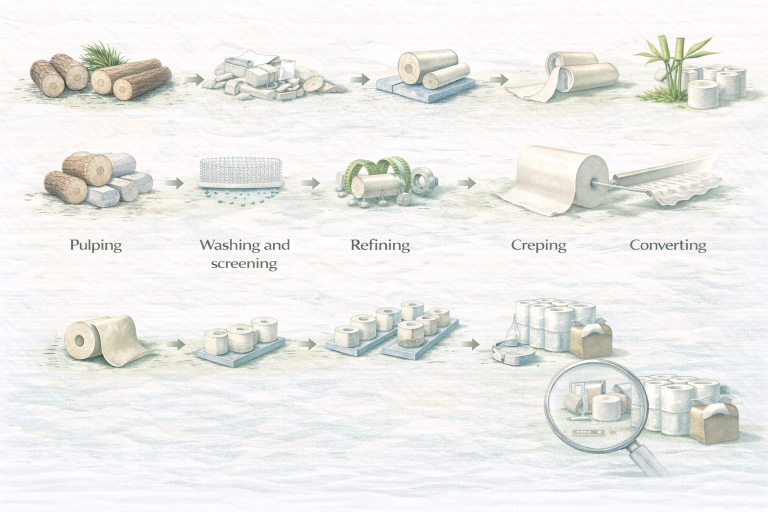
- 2、How These Two Types of Toilet Paper Are Made
- 3、Pros and Cons of Rapid Dissolving Toilet Paper
- 4、Pros and Cons of Slow Dissolving Toilet Paper
- 5、Which Type Is Better for Plumbing, Septic Systems, and Everyday Comfort
- 6、How to Choose the Right Toilet Paper for Your Home, RV, or Business
- 7、Final Thoughts
Toilet paper looks simple, but not all rolls behave the same once they meet water.
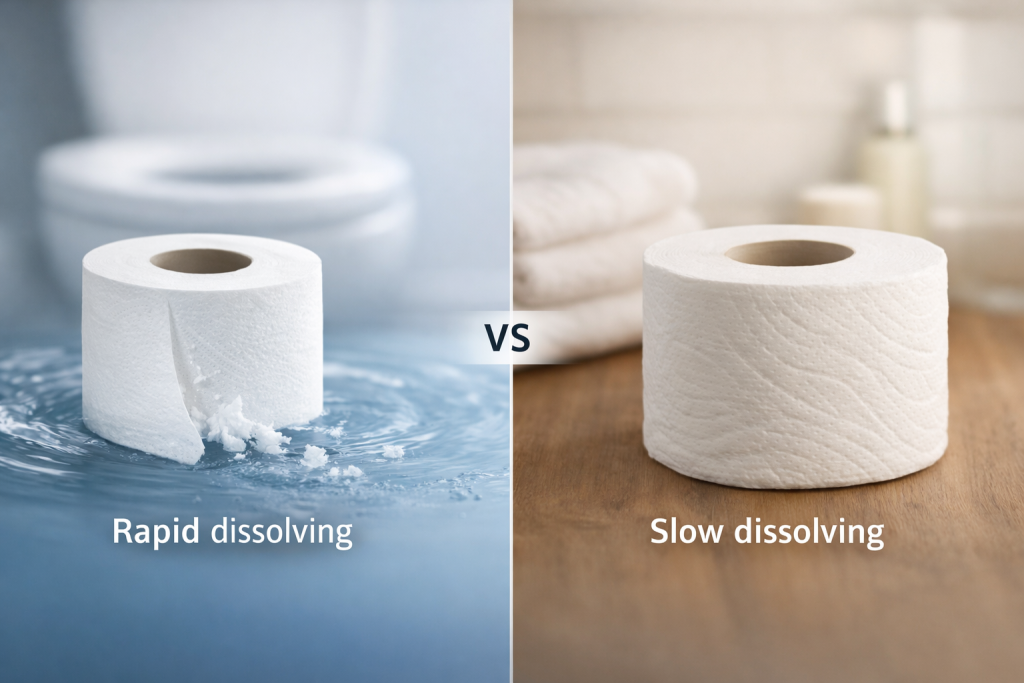
Some toilet paper breaks down very quickly after flushing. Some stays intact longer and feels stronger during use. That difference can affect your comfort, your plumbing, your septic system, and even your long-term cost.
If you have ever wondered why one toilet paper works well in an RV while another may increase the risk of clogs at home, the answer often comes down to dissolvability.
This guide explains what rapid dissolving and slow dissolving toilet paper are, how they are made, where each performs best, and how to choose the right one for your needs.
What Does Toilet Paper Dissolving Speed Mean
Dissolving speed refers to how quickly toilet paper breaks apart after it is flushed into water.
This does not mean the paper should fall apart in your hand during use. Good toilet paper needs a balance between two things — enough wet strength for cleaning, and enough dispersibility to break down after flushing.
In simple terms
- Rapid dissolving toilet paper breaks down faster in water
- Slow dissolving toilet paper holds together longer before dispersing
- The right choice depends on your plumbing system, usage habits, and comfort preference
1、What Is the Difference Between Rapid Dissolving and Slow Dissolving Toilet Paper
Rapid dissolving toilet paper is designed to disperse quickly after flushing.
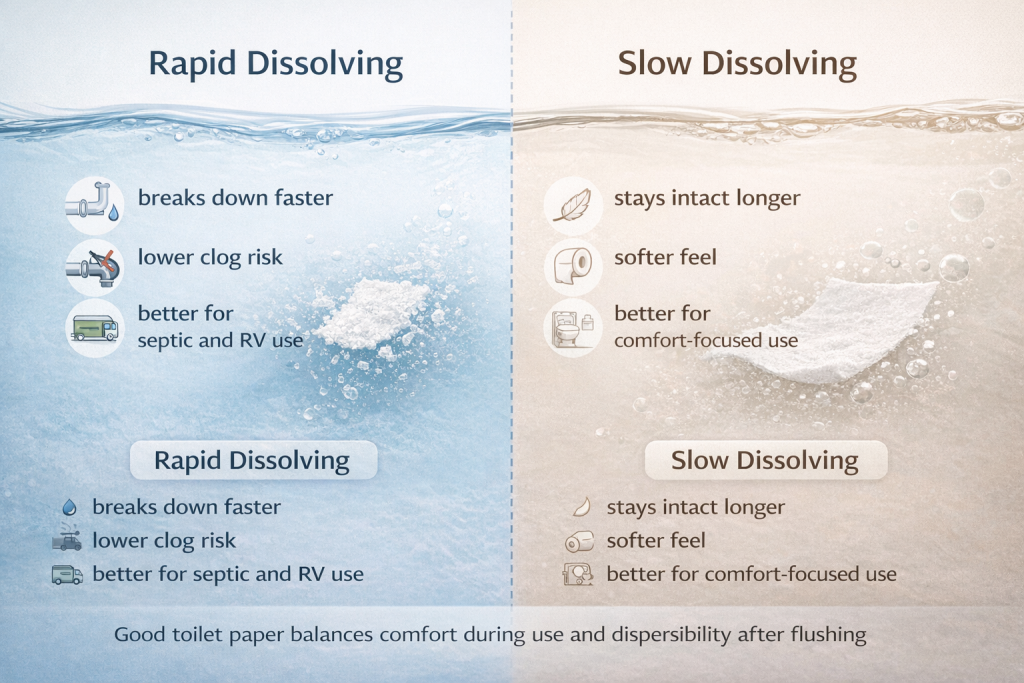
It is commonly used in places where plumbing systems are more sensitive, such as
- RVs
- boats
- aircraft or mobile sanitation systems
- homes with older pipes
- buildings with septic tanks
- low-flow toilet systems
Its main purpose is to reduce the risk of blockages by helping the paper break apart faster once it enters the drain line or septic environment.
Slow dissolving toilet paper breaks down more gradually in water.
This type is usually made to feel softer, thicker, or stronger during use. It is often preferred in homes where users care more about a plush feel and where plumbing systems are modern and in good condition.
It is common in
- residential bathrooms
- hotels
- premium toilet tissue lines
- households that prefer soft multi-ply rolls
Slow dissolving does not necessarily mean “bad.” It simply means the paper keeps its structure longer, which may improve comfort but can increase clog risk in the wrong setting.
2、How These Two Types of Toilet Paper Are Made
Rapid dissolving toilet paper is usually engineered to separate more easily in water.
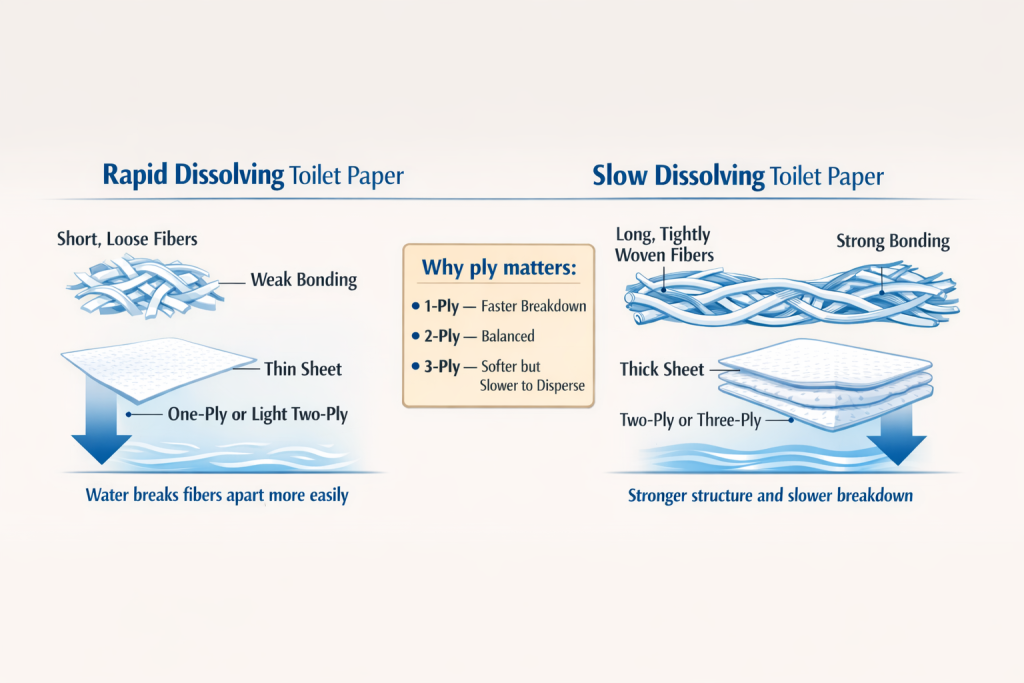
Manufacturing may vary by producer, but common features include
- shorter or more easily dispersed fiber structure
- lower bonding strength between fibers
- lighter basis weight
- simpler sheet construction
- lower ply count, often one-ply or light two-ply
- embossing or converting designs that support flushability
Because the paper is meant to break down quickly, manufacturers have to carefully balance softness, strength, and water dispersibility.
Some rapid dissolving products also use recycled fiber or bamboo-based fiber, depending on the target market and product positioning.
Slow dissolving toilet paper is generally designed for comfort and strength first.
It often includes
- longer or stronger fibers
- tighter fiber bonding
- thicker sheet construction
- more layers, such as two-ply or three-ply
- embossing patterns that add bulk and softness
- lotion-like softness positioning in some premium products
These features can improve the hand feel and reduce the number of sheets needed per use. At the same time, they can slow down how quickly the paper breaks apart after flushing.
Why Ply Matters So Much
One of the biggest factors behind dissolving speed is ply.
Ply means how many layers each sheet has.
One-ply toilet paper
- usually breaks down fastest
- is often recommended for septic systems and RV use
- may feel thinner, but tends to be safer for sensitive plumbing
Two-ply toilet paper
- offers a middle ground between comfort and flushability
- is the most common option in many markets
- can work well if the sheet design is still dispersible
Three-ply or thicker toilet paper
- often feels softer and more luxurious
- may take longer to break down
- can raise clog risk in older pipes or weak septic systems
In many real-world cases, people who struggle with toilet clogs are not using “too much paper” alone. They are often using too much thick paper.
4、Pros and Cons of Rapid Dissolving Toilet Paper
Rapid dissolving toilet paper offers practical benefits in the right environment.
Better for septic systems and older plumbing
Because it disperses more quickly, it is less likely to build up in pipes or tanks.
Lower clog risk
This is especially useful in homes with narrow pipes, old plumbing, or low water pressure.
Good for RVs and boats
Mobile sanitation systems need paper that breaks down fast and does not linger in tanks.
Often seen as a more practical flushability option
Many consumers choose rapid dissolving paper because they want fewer plumbing worries.
Can support eco-focused positioning
Some rapid dissolving products use recycled or alternative fibers, which may appeal to buyers who want a more environmentally aware choice.
Disadvantages of Rapid Dissolving Toilet Paper
It is not perfect for every user.
It may feel less soft
Because the paper is designed to disperse faster, some products feel thinner or less plush.
You may use more sheets
A thinner sheet can mean higher sheet count per use.
Product quality varies a lot
Some rapid dissolving toilet paper performs very well. Some low-quality products may feel too weak or tear too easily.
It can cost more in specialty categories
Products made for RVs, boats, or septic-safe positioning may have a higher retail price.
5、Pros and Cons of Slow Dissolving Toilet Paper
Slow dissolving toilet paper remains popular for a reason.
6、Which Type Is Better for Plumbing, Septic Systems, and Everyday Comfort
Many users prefer the thicker, smoother feel.
Stronger during use
The sheet usually stays intact better when wet.
Often feels more premium
This makes it attractive in home, hotel, and hospitality settings.
You may need fewer sheets
A stronger sheet can mean better efficiency per use, depending on the product.
5、Pros and Cons of Slow Dissolving Toilet Paper
The same features that improve comfort can also create problems in some settings.
Higher clog risk in weak plumbing
Thicker paper can move more slowly through pipes.
Not ideal for septic or RV systems
It may not disperse fast enough in more sensitive systems.
Can be harder on aging infrastructure
In old buildings, thick and slow-breaking paper can add to maintenance issues.
Environmental concerns may be higher
Some premium slow dissolving products rely on virgin pulp, heavier sheet structures, and more processing to create bulk and softness.
Which Toilet Paper Is Better for Plumbing
If your main concern is plumbing safety, rapid dissolving toilet paper is usually the safer choice.
It is especially suitable for
- old houses
- small pipes
- frequent clog situations
- septic tank households
- RVs and boats
- rental properties with mixed user habits
If your plumbing is modern and works well, you may still use a slower dissolving toilet paper without obvious problems. But that does not mean every thick product is risk-free.
A simple rule is this
- the more sensitive the plumbing, the more important fast dispersibility becomes
- the more premium and bulky the sheet, the more carefully it should be matched to the system
6、Which Type Is Better for Plumbing, Septic Systems, and Everyday Comfort
For septic tanks, rapid dissolving or septic-safe toilet paper is usually the better option.
A good septic-friendly paper should
- break down quickly in water
- reduce accumulation in the tank
- move more easily through the system
- avoid unnecessary strain on septic performance
One-ply and certain two-ply septic-safe products are usually better choices than thick, quilted, ultra-soft toilet tissue.
For homes that rely on septic systems, flushability is not just a convenience issue. It is a maintenance issue.
Which Toilet Paper Is More Comfortable
If comfort is your top priority, slow dissolving toilet paper often wins.
This is because it is more likely to have
- thicker sheets
- softer embossing
- higher bulk
- a more cushioned feel
That said, the market has improved a lot. Some modern rapid dissolving products are much softer than older versions, so the gap is not always as large as it used to be.
The best product is often the one that balances
- enough softness for everyday comfort
- enough strength during use
- enough dispersibility after flushing
Which Toilet Paper Is Better for the Environment
There is no single answer, because environmental impact depends on more than dissolving speed alone.
You should look at several factors together
- virgin pulp or recycled fiber
- bamboo or wood-based fiber
- bleaching method
- energy and water use
- packaging type
- transport distance
- flushability and downstream system impact
Rapid dissolving toilet paper is often viewed as more environmentally practical when it reduces plumbing stress and works well in septic systems.
However, a slow dissolving toilet paper made from responsibly sourced fiber may still be a good choice in a modern urban setting.
The better question is not only “Which dissolves faster” but also “Which product matches the system it will be used in.”
7、How to Choose the Right Toilet Paper for Your Home, RV, or Business
Here is a simple decision guide.
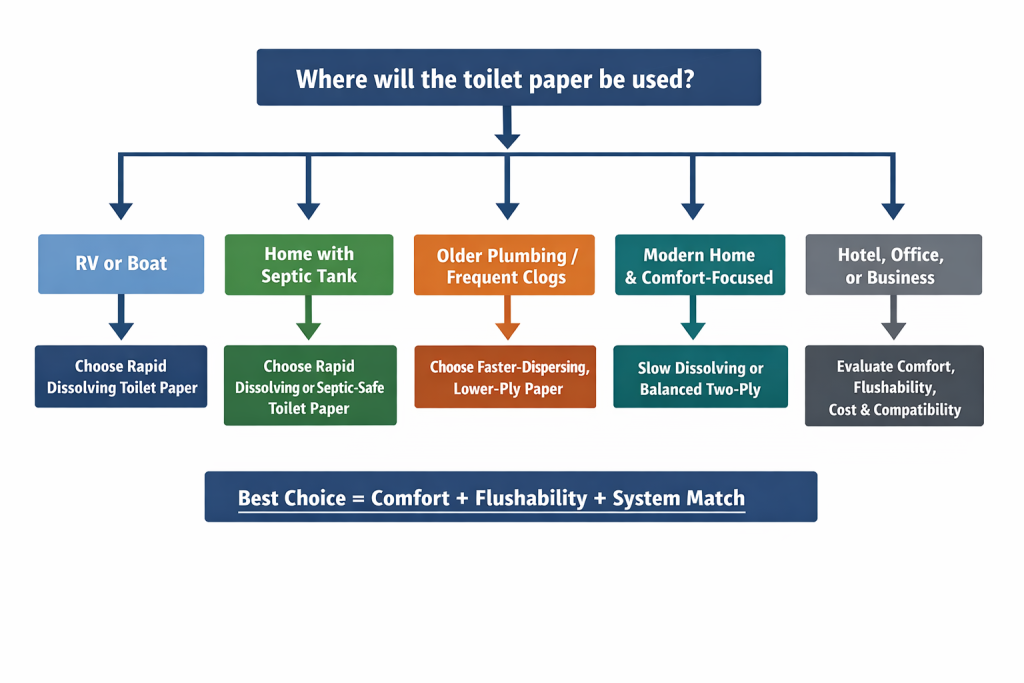
Choose rapid dissolving toilet paper if you use
- an RV
- a boat
- a septic tank
- an older home
- a low-flow toilet
- a property with frequent clogs
Choose slow dissolving toilet paper if you want
- a softer feel
- stronger wet strength
- a more premium bathroom experience
- a product for modern, well-functioning plumbing
Choose a balanced two-ply product if you want
- a middle ground between comfort and flushability
- family-friendly daily use
- fewer performance extremes
What Buyers and Brands Should Check Before Choosing
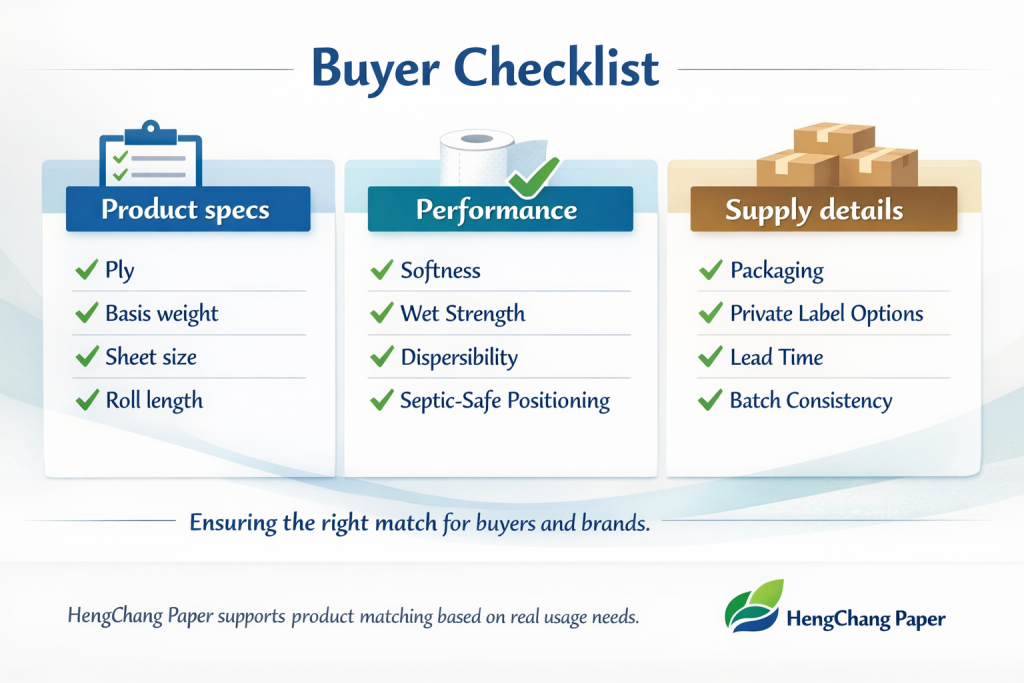
For retail buyers, hospitality buyers, and private label importers, dissolving speed should not be judged by softness alone.
A better product review should include
- ply count
- basis weight
- wet strength
- dispersibility performance
- septic-safe positioning
- fiber source
- roll size and sheet count
- user comfort
- intended use scenario
This matters because “soft” does not always mean “better,” and “fast dissolving” does not have to mean “low quality.”
At HengChang Paper, we believe product design should match actual use conditions. For some markets, fast-dispersing tissue is the smarter option. For others, a softer and stronger household roll may be the better fit. The key is choosing the right balance rather than chasing only thickness or only softness.
Common Myths About Toilet Paper Dissolving Speed
Myth 1 — Softer toilet paper is always better
Not always. A very soft, bulky roll may increase clog risk in the wrong plumbing system.
Myth 2 — If a toilet paper says “premium,” it must be higher quality
Premium feel and good flushability are not the same thing. Performance depends on product engineering.
Myth 3 — All septic-safe toilet paper feels rough
This used to be more common, but newer products can offer a much better balance between comfort and breakdown speed.
Myth 4 — Thick toilet paper is fine in every home
Pipe size, water volume, and system age all matter. What works in one bathroom may not work in another.
Final Thoughts
Rapid dissolving toilet paper and slow dissolving toilet paper are built for different priorities.
If you care most about plumbing safety, septic performance, and lower clog risk, rapid dissolving toilet paper is usually the better choice.
If you care most about softness, thickness, and a more luxurious feel, slow dissolving toilet paper may suit you better — as long as your plumbing can handle it.
The smartest choice is not about buying the softest roll or the fastest-dispersing roll. It is about matching the paper to the place where it will be used.
When you understand that balance, you can choose toilet paper more confidently and avoid a lot of unnecessary bathroom trouble.
FAQ
Does rapid dissolving toilet paper break during use
Not necessarily. A good product should still provide enough strength during normal use, even if it breaks down faster after flushing.
Is one-ply toilet paper better for septic tanks
In many cases, yes. One-ply toilet paper usually breaks down faster and is often a safer choice for septic systems.
Can thick toilet paper clog pipes
Yes, especially in older homes, small pipes, low-flow systems, or when too much is used at one time.
Is slow dissolving toilet paper bad
No. It is not bad by default. It is simply better suited to systems that can handle thicker, slower-breaking paper.
What is the best toilet paper for RVs and boats
Rapid dissolving toilet paper is usually the best choice because it is made to disperse faster and reduce system buildup.