contents
- 1、What pulping really does in papermaking
- 2、Mechanical pulping, high yield, lower brightness, shorter life
- 3、Chemical pulping, stronger fibers, brighter sheets, more process burden
- 4、The practical comparison buyers should remember
- 5、Where each pulp type tends to show up in real products
- 6、What this means for tissue and hygiene products
- 7、Sustainability, do not treat it as one number
- 8、A buyer checklist, how to choose the right pulping route for your program
- 9、Key takeaway
- mechanical pulping
- chemical pulping
- wood chips and logs
- recycled paper streams
- non wood fibers like bamboo, straw, bagasse, hemp
- groundwood pulping — grinds logs against a stone
- thermomechanical pulping — uses heat and steam to soften wood before refining
- chemi thermomechanical pulping — uses mild chemicals first, then refining for better properties
- high pulp yield, often around 90 to 95 percent
- lower raw material waste
- lower chemical use
- cost advantage for grades that do not need high brightness
- lower paper strength and flexibility in many grades
- lower brightness due to lignin
- higher risk of yellowing over time
- not ideal for products that need long shelf life or a clean white look
- kraft pulping — the most widely used route for strong, versatile pulp
- sulfite pulping — often used for fine papers, different fiber characteristics
- soda pulping — a simpler route used for certain specialty needs
- higher strength and durability
- higher brightness potential
- better aging resistance, less yellowing
- more stable fiber behavior for demanding grades
- lower pulp yield, often around 40 to 55 percent
- higher energy and chemical needs
- more process water and more treatment requirements
- higher operating cost
- cost and yield
- acceptable performance without high brightness
- short life products where yellowing is less important
- strength and durability
- clean appearance and brightness
- stability over time and consistent performance
- if the product must stay bright and stable — chemical pulping usually wins
- if the product targets cost and volume — mechanical pulping can make sense
- newsprint, magazines, catalogs
- some paperboard grades
- selected tissue structures where bulk and cost matter and brightness targets are modest
- printing and writing papers
- labels and specialty papers
- higher grade tissue where softness and cleanliness targets are strict
- towel grades that need reliable wet performance when combined with the right converting
- chemical pulp often supports softer feel and cleaner appearance
- mechanical based fibers can add bulk, but they may increase color variability and aging risk
- wet strength targets matter more
- fiber strength and bonding behavior become critical, chemical pulp often supports stable performance
- recycled pulp adds another layer of variability
- strong sorting, cleaning, and contamination control matters more than the label
- mechanical pulping uses more of the wood, but often creates lower brightness fibers that age faster
- chemical pulping wastes more wood mass, but mills can recover energy from process streams and produce long lasting fibers
- recycled pulp reduces virgin fiber demand, but needs strong cleaning and may still carry quality variability
- ask for verified recycled content when claimed
- ask for responsible forestry certification when virgin pulp is claimed
- ask for basic process control evidence, not slogans
- do you need high brightness, or is natural color acceptable
- do you need long shelf stability and low yellowing risk
- what strength targets matter, dry strength, wet strength, or both
- what lint and dust level is acceptable for your market
- what cost per use target matters, not only cost per ton
- pulp type and pulping route used in the furnish
- expected yield and tradeoffs in performance
- quality control tests, tensile, brightness, lint, moisture stability
- batch records and traceability for repeat orders
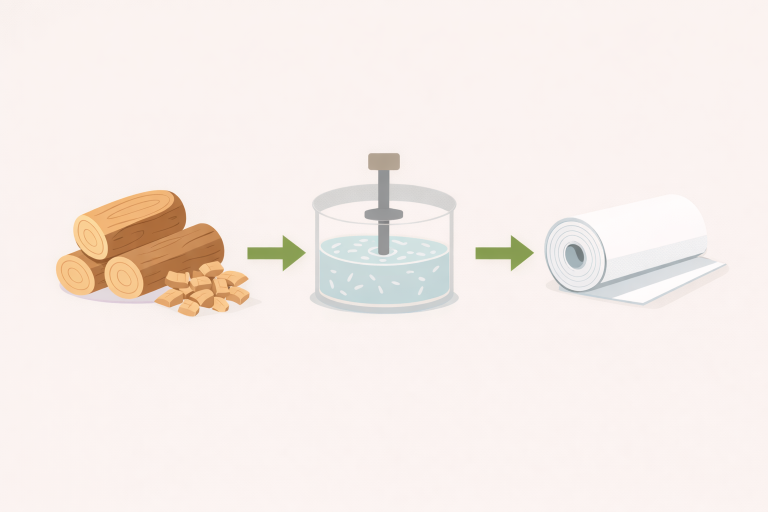
Pulping turns wood or other plant material into usable fibers.
That one step decides most of what buyers feel later — softness, strength, brightness, aging behavior, and cost.
If you source tissue, printing, or packaging grades, you will hear two main routes
They do the same job in different ways — separating fibers from lignin, the natural binder in wood.
1、What pulping really does in papermaking
Pulping frees cellulose fibers and removes impurities that can darken paper or weaken performance.
It also changes fiber behavior, including bonding potential and flexibility.

Common raw material sources include
Your raw material choice matters, but pulping method often decides the biggest tradeoffs.
2、Mechanical pulping, high yield, lower brightness, shorter life
Mechanical pulping uses physical force to separate fibers.
It keeps most lignin attached to the fibers, which helps yield but limits brightness and aging stability.
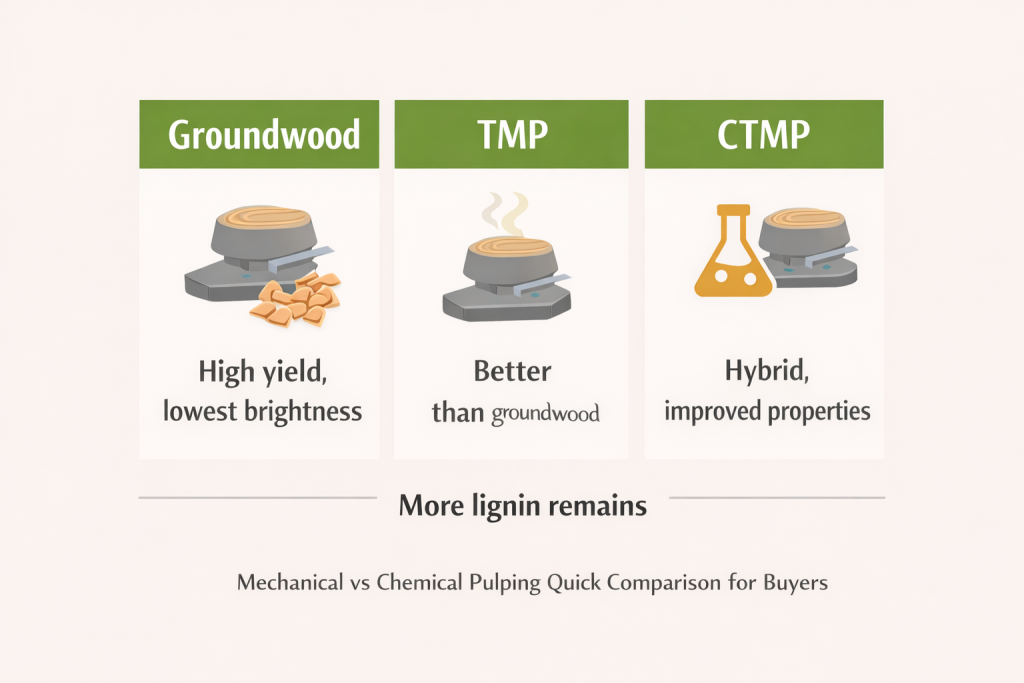
Common mechanical routes
What mechanical pulping does well
Where mechanical pulping struggles
3、Chemical pulping, stronger fibers, brighter sheets, more process burden
Chemical pulping cooks wood chips in digesters so chemicals dissolve lignin.
That produces fibers with very low lignin content, which improves strength and brightness potential.
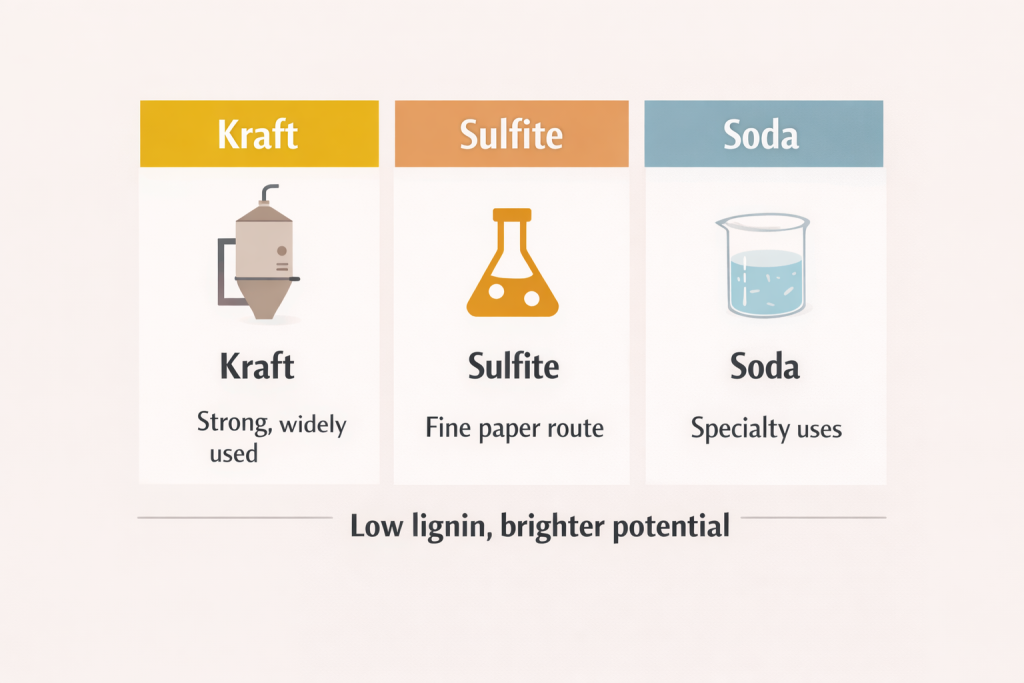
Common chemical routes
What chemical pulping does well
Tradeoffs you should expect
4、The practical comparison buyers should remember
When buyers ask which is better, the real answer is job based.
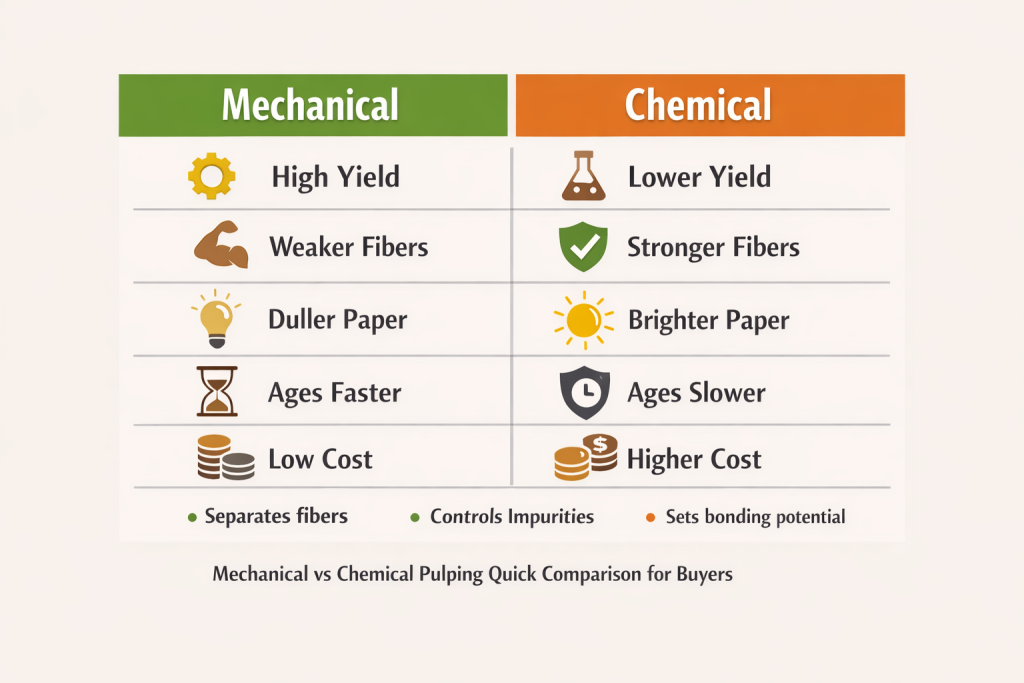
Mechanical pulping usually fits when you prioritize
Chemical pulping usually fits when you prioritize
A simple signal you can use
5、Where each pulp type tends to show up in real products
Mechanical pulp often appears in
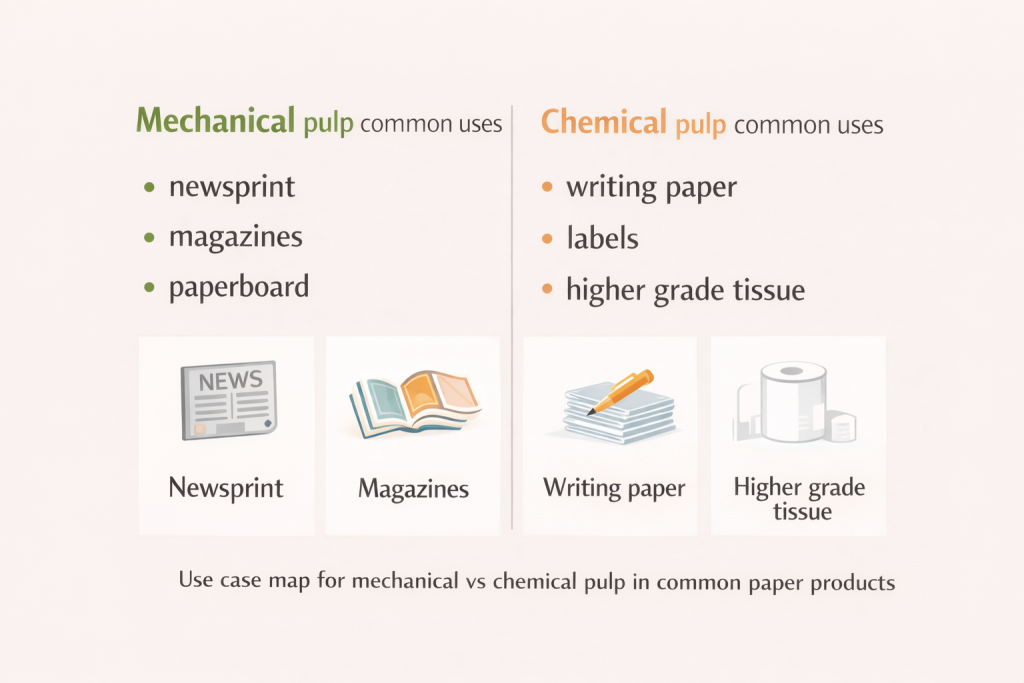
Chemical pulp often appears in
For tissue buyers, the key is consistency.
One supplier can call a product tissue grade, but the fiber route decides lint, feel, and batch stability.
6、What this means for tissue and hygiene products
Tissue performance comes from fiber plus machine settings.
Still, pulping method sets the baseline.
For toilet tissue and facial tissue
For paper towels and napkins
If you buy recycled content products
7、Sustainability, do not treat it as one number
Sustainability is not only virgin vs recycled.
Pulping method changes yield, chemicals, energy, and waste streams.
A balanced way to evaluate sustainability claims
If you want sustainability that stands up to scrutiny
8、A buyer checklist, how to choose the right pulping route for your program
Start with the end use, then work backward.
Ask these questions
Then ask suppliers to confirm
At HengChang Paper, we prefer turning pulp talk into measurable specs.
That helps distributors and private label brands lock consistent feel and performance across shipments.
Key takeaway
Mechanical pulping and chemical pulping solve the same problem with different tradeoffs.
Mechanical pulping favors yield and cost, chemical pulping favors strength and brightness stability.
Choose based on the product job, then verify with samples, tests, and batch consistency.