contents
- 1、Why some kitchen paper towels should not touch food
- 2、What can go wrong when you use the wrong paper towel
- 3、A simple checklist to identify food safe paper towels
- 4、How to use paper towels safely with food
- 5、Paper towels vs reusable cloths
- 6、Common myths that lead to bad choices
- 7、Better alternatives for specific food tasks
- 8、Quick buyer guide
- 9、FAQ
- 10、A simple takeaway
How to choose the right roll and use it without risking food contamination
Kitchen paper towels are one of the most used items in a home kitchen. You grab one to blot fried food, dry produce, wipe a cutting board, or clean up raw meat drips.
That convenience has a hidden problem. Not every paper towel is made for food contact, and the wrong choice can leave fibers on food, transfer unwanted residues, or spread germs from one area to another.
This guide combines the most useful ideas from the articles you shared and turns them into one practical checklist you can use today.
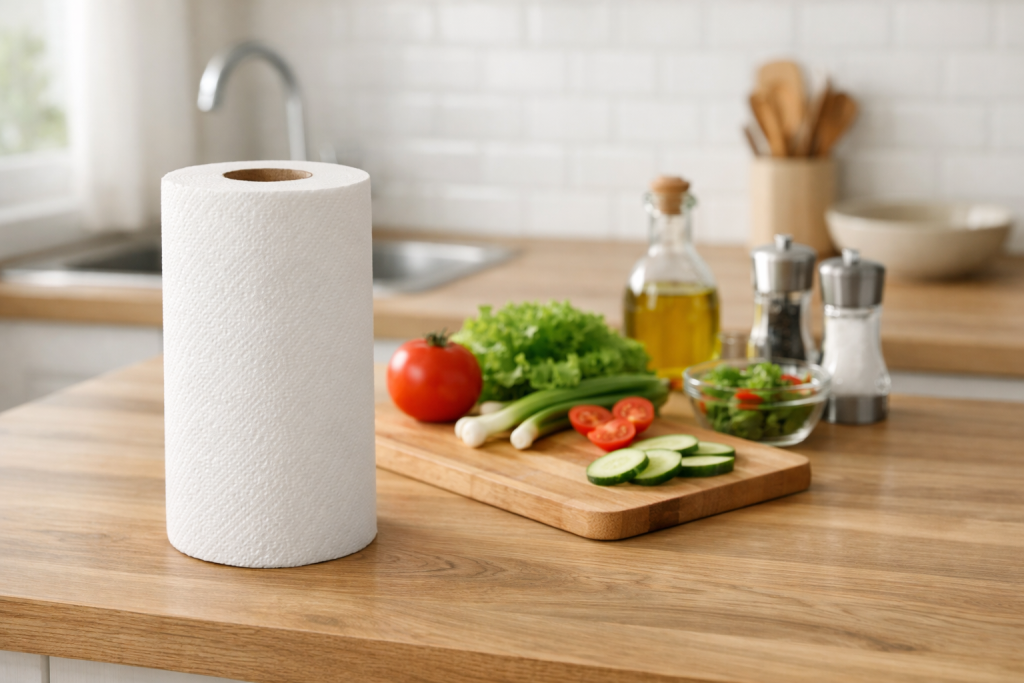
1、Why some kitchen paper towels should not touch food
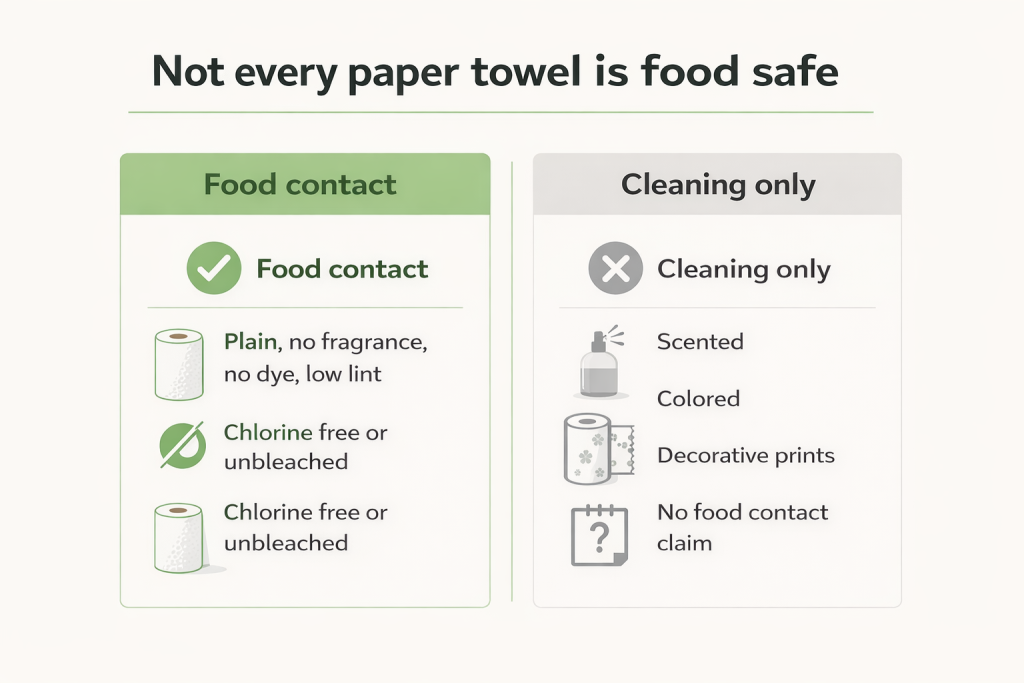
A paper towel can look clean and still be a poor match for food contact. The difference usually comes from what it is made of and how it is processed.
Materials change the risk profile
- Virgin wood pulp
Often consistent in quality and commonly used for household paper towels
Good absorbency and predictable strength - Bamboo pulp
Often selected by buyers who want a more plant based option
Quality varies by manufacturer, so labels and testing still matter - Recycled paper
Can reduce waste, but it may carry higher variability in input materials
If a brand does not clearly state food contact suitability, you should treat it as cleaning only
Processing choices matter more than most people think
Manufacturers may use steps that improve whiteness, softness, wet strength, or absorbency. Some of these steps can be harmless, others may not be intended for food contact.
Common red flags you can spot on the label or product page
- Added fragrance
- Added dyes or printed patterns in the sheet area
- Vague wording like multi purpose for home use with no mention of food contact
- No clear statement about chlorine free or food grade intent
2、What can go wrong when you use the wrong paper towel
People usually notice the risk only after something looks or smells off. The issues are often subtle, which is why it helps to choose well upfront.
Chemical transfer
If a towel uses certain bleaching methods or additives, small residues can move to moist or oily foods. Fried food, bacon, and buttery pastries make transfer more likely.
Fiber shedding
Low quality sheets can shed lint, especially when they get wet. Those fibers can cling to produce, seafood, and baked goods.
Taste and odor changes
Fragrances and dyes can affect smell or taste. Even mild scents can show up on warm foods.
Cross contamination
A paper towel can reduce cross contamination only if you use it correctly. If you wipe raw chicken juices, then touch a spice jar or a faucet handle with the same towel, you spread the problem.
3、A simple checklist to identify food safe paper towels
You do not need perfect knowledge of tissue manufacturing. You need a short list of things to check each time you buy.
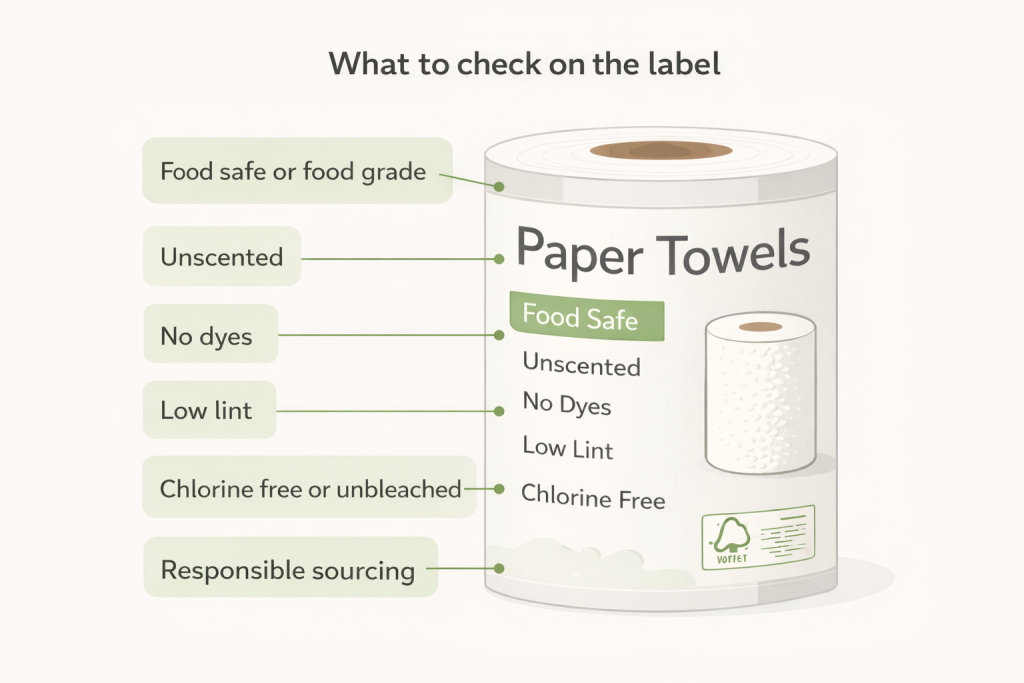
1 Look for clear food contact positioning
On pack copy, product page, or brand FAQ, look for phrases like
- food safe
- food grade
- suitable for food contact
- compliant with food contact requirements
If the product never mentions food contact, assume it is for cleaning only.
2 Prefer no fragrance, no dye, and low lint
For any use that touches food directly, keep it plain.
- Avoid scented paper towels
- Avoid colored sheets
- Avoid decorative prints where the ink can touch food
3 Choose chlorine free or unbleached when possible
White does not automatically mean unsafe, but chlorine free and unbleached options reduce uncertainty for food contact uses.
If you buy bright white towels, do not assume they are food safe. Check the label language.
4 Check for quality and process signals
These signals often appear together in better products
- consistent ply structure
- strong wet strength
- low lint claims
- quality management mentions like ISO processes
- responsible fiber sourcing mentions such as FSC
Certifications do not replace good labeling, but they can be a helpful extra signal.
5 Match the towel to the task
Not every task needs the same sheet.
- For blotting oil or draining fried foods
Choose higher absorbency and better wet strength - For wrapping produce briefly
Choose low lint, plain, and no fragrance - For wiping surfaces with sanitizer
Choose durable sheets that do not fall apart
4、How to use paper towels safely with food
Choosing the right roll helps, but usage habits matter just as much.
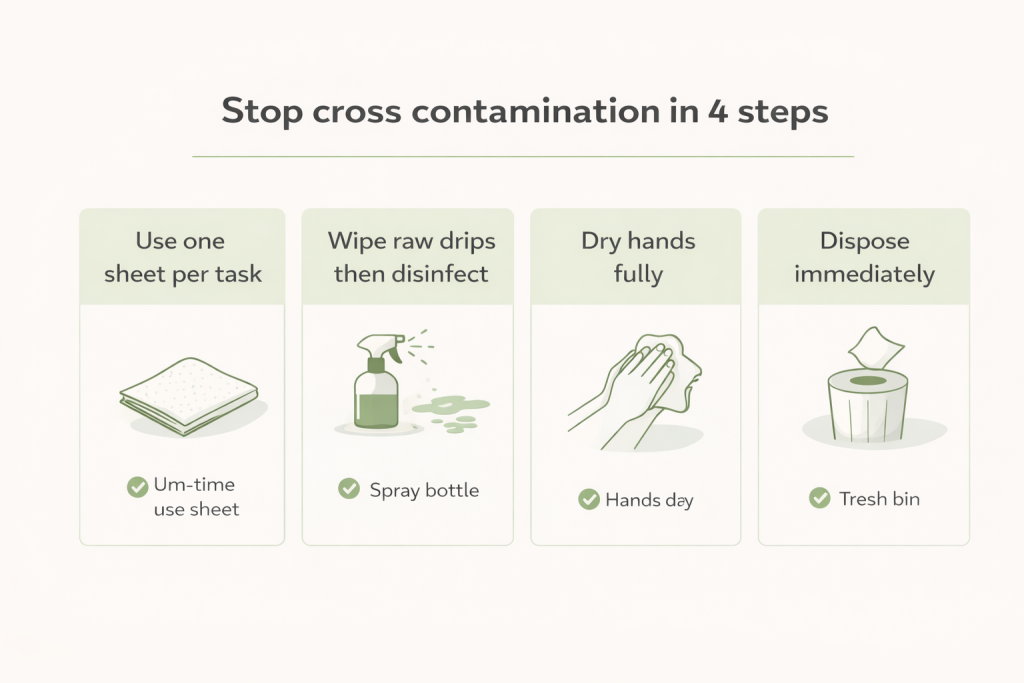
Use paper towels for high risk moments
Use paper towels when you want a single use barrier.
Good moments for paper towels
- after handling raw meat, eggs, or seafood
- wiping raw drips before disinfecting a surface
- drying hands during cooking
- cleaning high touch areas like faucet handles and fridge pulls
Use a fresh sheet per task
This is the rule that reduces cross contamination the most.
- One sheet for raw food contact cleanup
- Dispose immediately
- New sheet for the next step
Keep food contact short
Even food safe paper towels are not meant to wrap oily food for hours.
Practical guidance
- blot, lift, and remove
- do not leave a towel pressed on warm greasy food for a long time
- for longer contact, use parchment paper or a food safe wrap
Dry hands fully
Wet hands transfer microbes more easily than dry hands.
A simple routine
1 Wash hands with soap and water
2 Dry completely with a clean paper towel
3 Use that towel to turn off the faucet if needed
4 Dispose
5、Paper towels vs reusable cloths
How to decide without turning it into a debate
Reusable cloths can be fine for low risk tasks. They can also become a germ reservoir if you reuse them too long or wash them at low temperatures.
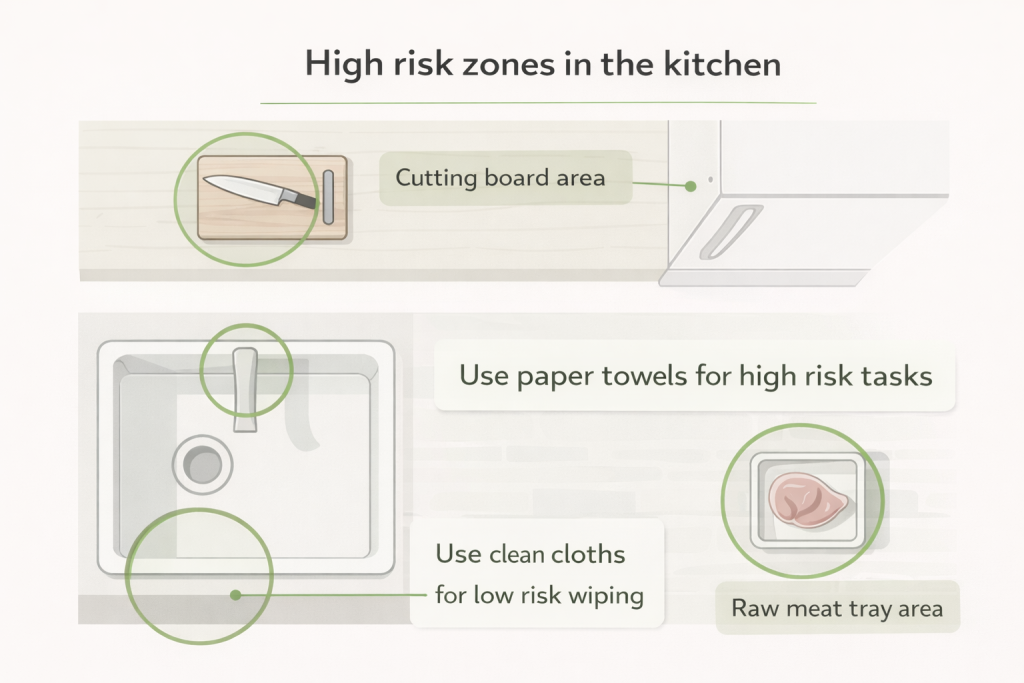
A practical split that works for many kitchens
- Use paper towels for raw meat handling zones and quick germ control
- Use clean cloths for low risk wiping, then wash and fully dry them
- Do not use one cloth across raw and ready to eat zones
If you want a more sustainable approach, focus on smarter usage rather than banning paper towels entirely.
- Use paper towels only where single use truly reduces risk
- Use cloths in low risk areas
- Choose responsibly sourced tissue products when you do buy paper
Hengchang Paper also cares about sustainability and consistent quality, so we pay close attention to fiber sourcing and manufacturing stability when producing tissue and towel products.
6、Common myths that lead to bad choices
Myth 1
All white paper towels are food safe
Reality
Whiteness alone tells you nothing. Check food contact wording and avoid fragrance and dyes.
Myth 2
Recycled paper towels are always the greener and safer choice
Reality
They can be greener, but food contact safety depends on purification, controls, and labeling. If the brand does not clearly position it for food contact, keep it for cleaning only.
Myth 3
More expensive always means safer
Reality
Price does not guarantee food safe processing. Labels and transparency matter more than price.
7、Better alternatives for specific food tasks
Paper towels are useful, but you will get better results with the right tool in the right moment.
For wrapping and draining
- parchment paper
- baking paper
- food safe wax paper
For reusable drying and wiping
- cotton or linen cloths
- separate cloths for different zones
- wash hot, dry fully, replace often
For buyers who prefer plant based options
- bamboo paper towels
Focus on plain, low lint, and clear food contact labeling.
8、Quick buyer guide
Pick the right paper towel for your kitchen
If you want one short decision flow, use this.
1 If it will touch food directly
Choose plain, no fragrance, no dyes, low lint
Prefer unbleached or chlorine free
Look for clear food safe or food grade wording
2 If it will wipe food prep surfaces
Choose strong wet strength and good absorbency
Use with a food safe sanitizer
Use one sheet per wipe, then dispose
3 If it is for general household cleaning
You have more flexibility
Recycled content can be fine here
9、FAQ
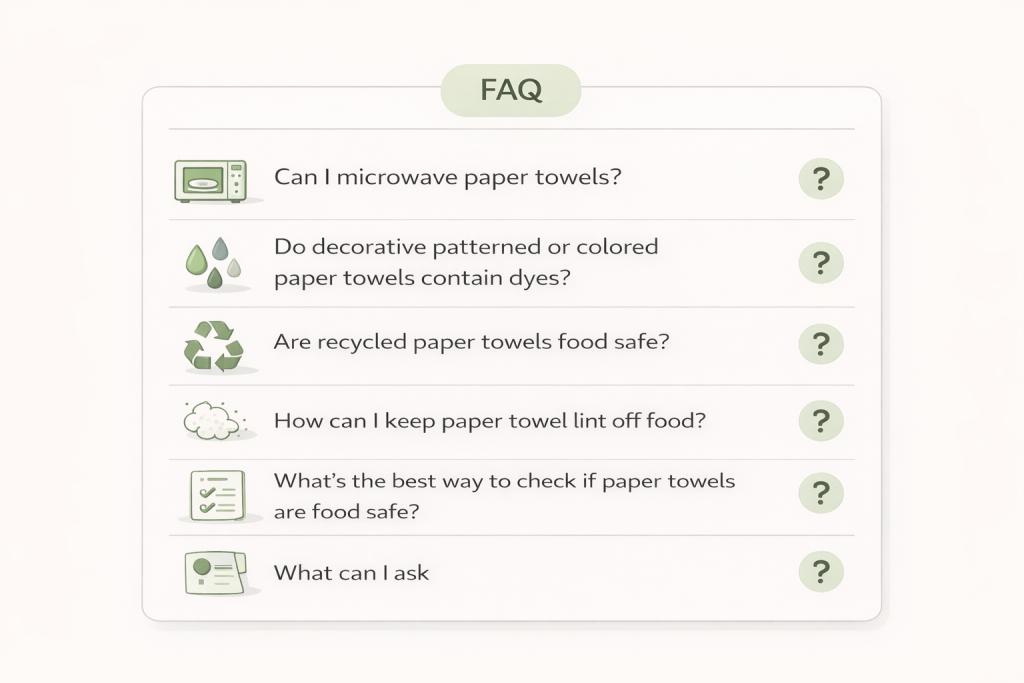
Can I use regular kitchen paper towels to drain fried foods
If the towel is not clearly positioned as food safe or food grade, you should avoid direct contact with hot oily foods. Choose a product that clearly supports food contact, or use a wire rack plus parchment paper for a safer setup.
Are recycled paper towels safe for food contact
Some can be, but you need clear labeling and strong quality controls from the manufacturer. If the product page does not mention food contact suitability, use it for cleaning only.
How can I tell if a paper towel is chlorine free
Look for wording like chlorine free, processed chlorine free, or unbleached. If the listing does not mention it, do not assume.
Is it safe to use paper towels in the microwave
Use caution. Avoid printed, dyed, or fragranced sheets. For heating food, paper towels are often used briefly to cover splatter, but a microwave safe cover or parchment paper is usually a cleaner choice.
Can colored paper towels be used with food
For direct food contact, it is safer to avoid colored or printed towels. Dyes and inks are unnecessary risk for most kitchens.
What is the single best habit to reduce cross contamination
Use a fresh paper towel per task, especially after raw meat contact, and dispose immediately. That one habit prevents most kitchen spread.
10、A simple takeaway
Food safety with kitchen paper towels is not about fear. It is about choosing a plain, clearly labeled option for food contact, then using it in a single use way that blocks germs from moving around your kitchen.
If you want, tell me your target market and product type you want to promote, such as bamboo kitchen towels, virgin pulp rolls, or private label OEM. I can adapt this into a tighter SEO version for your site and add a matching meta title, meta description, and keyword plan.