contents
- 1、Does toilet paper have chemicals
- 2、What chemicals are in toilet paper
- 3、What “chemical free toilet paper” can realistically mean
- 4、Quick checklist — how to choose toilet paper without chemicals
- 5、Unbleached chemical free toilet paper — pros, cons, and who it fits
- 6、Best chemical free toilet paper — how to pick the best one for your home
- 7、How to do simple at-home tests
- 8、Common mistakes people make
- 9、A gentle note for business buyers
- 10、FAQ
Toilet paper looks simple, but the details matter.
If you have sensitive skin, a septic system, or a preference for cleaner materials, you may start asking the same question.
Does toilet paper have chemicals, and if yes, which ones.
This guide explains the most common chemicals in toilet paper, what “chemical free toilet paper” can realistically mean, and how to choose toilet paper without chemicals in a practical way.
You will also see when unbleached chemical free toilet paper makes sense, and what to look for if you want the best chemical free toilet paper for daily use.
1、Does toilet paper have chemicals
In many products, yes.
Most toilet paper contains more than just paper fiber.
Brands may add processing aids, whitening agents, binders, lotions, fragrances, and packaging-related additives.
Some are harmless for many users, others can bother sensitive skin, and some raise concerns because they are hard to verify from the label.
If you search “are there chemicals in toilet paper” you will see a wide range of claims.
A safer approach is to focus on what you can check and what you can avoid.
2、What chemicals are in toilet paper
Different mills use different recipes, so you rarely get a complete list.
Still, many “chemicals in toilet paper” fall into a few common groups.
Whitening and bleaching related agents
Some toilet paper uses bleaching to make the sheet look bright white.
Common industrial bleaching methods can involve chlorine-based chemistry, while many modern producers use alternative processes that reduce certain byproducts.
What matters for shoppers is not the chemistry lecture, but the signal on the label.
Look for statements like chlorine-free processing, and prefer brands that explain their approach clearly.
Fragrance and lotion additives
Scented toilet paper and “comfort” variants can contain fragrance compounds and skin-feel additives.
If you feel irritation, itching, or dryness, these are frequent suspects.
If your goal is toilet paper without chemicals, start here.
Choose unscented, lotion-free products first, because they remove a large source of avoidable additives.
Wet strength resins and binders
Some products add strength aids so the sheet holds together better, especially when wet.
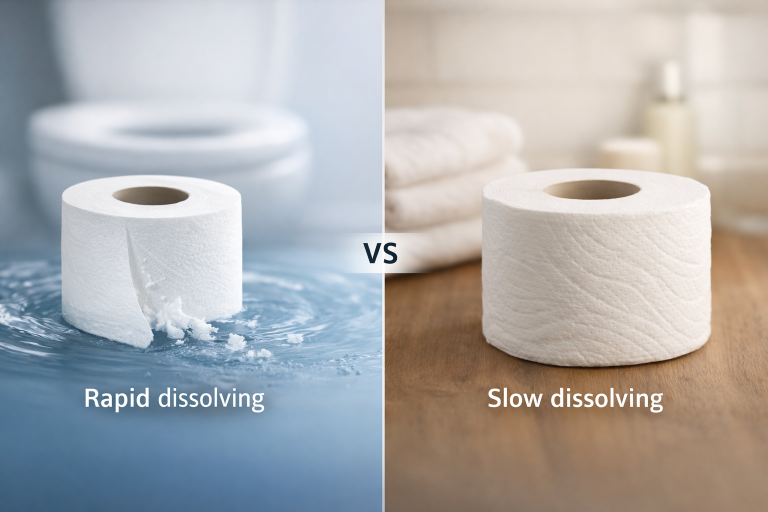
That improves durability, but it may reduce how quickly paper breaks down in water.
If you care about septic systems, RV tanks, or older plumbing, prioritize fast-dissolving paper.
Avoid “extra strong” claims when they do not also mention dissolvability.
Dyes and inks
Colored toilet paper, printed rolls, and heavily dyed packaging can introduce dyes and ink systems.
Most consumers do not need those features, and they can add uncertainty.
If you want best chemical-free toilet paper choices, go plain.
White or natural, no added colors.
Trace chemicals from recycled inputs
Recycled fiber can be a responsible choice, but it can also carry trace residues from the previous life of paper.
Good suppliers control inputs and process quality, but the details vary widely.
If you want the cleanest and simplest option, you may prefer virgin fiber from responsibly managed sources, or carefully controlled recycled lines with transparent safety standards.
3、What “chemical free toilet paper” can realistically mean
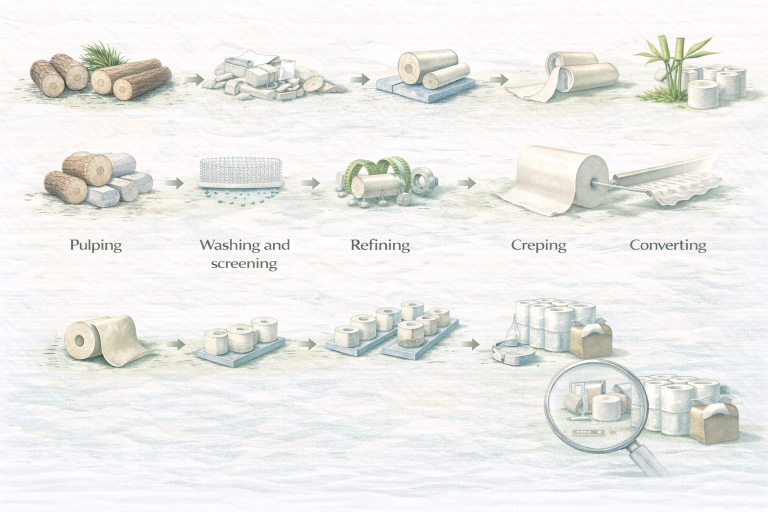
A truly chemical-free industrial process is not realistic, because papermaking uses water treatment and processing aids.
So the phrase chemical free toilet paper often works best as a consumer shorthand.
In practice, it usually means
- No added fragrance, no lotions
- No dyes
- Minimal additives, and a simple ingredient story
- A bleaching approach that avoids certain high-concern byproducts, or an unbleached option
- Clear statements on testing, certifications, or safety controls
If you see “toilet paper without chemicals,” read it as “without added unnecessary chemicals.”
That is the standard you can actually shop for.
4、Quick checklist — how to choose toilet paper without chemicals
Use this short list when you compare products.
- Unscented and lotion-free
- No dyes
- Simple material claim, such as bamboo fiber, wood pulp, or recycled fiber, with sourcing detail
- Clear bleaching statement, or choose unbleached
- Low lint, less dust usually means fewer fillers and less irritation
- Breakdown performance, especially for septic and RV use
- Third-party signals, such as FSC for responsible fiber sourcing, or other credible certifications the brand can verify
This checklist helps you shop in minutes, without relying on vague marketing.
5、Unbleached chemical free toilet paper — pros, cons, and who it fits
Unbleached chemical free toilet paper is often light brown or off-white.
It looks “more natural,” but it is not automatically better for everyone.
When unbleached makes sense
- You want fewer processing steps tied to whitening
- You prefer a simpler ingredient story
- You have very sensitive skin and you want to remove as many variables as possible
When you might prefer a modern whitened option
Some whitened papers still keep a clean, gentle formula.
They may use processes designed to reduce certain unwanted residues and still deliver a soft sheet.
If you live with shared bathrooms, guests sometimes strongly prefer white paper.
In that case, look for a product that stays unscented, lotion-free, dye-free, and transparent about its processing.
6、Best chemical free toilet paper — how to pick the best one for your home
There is no single best chemical free toilet paper for everyone.
The best choice depends on skin sensitivity, plumbing, feel preference, and budget.
Use these “best fit” rules.
If you have sensitive skin
- Choose unscented, lotion-free, dye-free
- Prefer low-lint sheets
- Avoid “cooling,” “extra soft with lotion,” or perfumed variants
- Consider unbleached chemical free toilet paper if you still react to standard options
If you have septic, older plumbing, or an RV tank
- Prioritize fast breakdown, and avoid overly strong wet-strength claims
- Test at home with a jar breakdown check
- Choose a simpler sheet structure, not thick multi-layer “ultra strong” styles
If you want a balanced daily option
- Start with unscented, dye-free, and a reputable bleaching statement, or unbleached
- Look for stable roll specs, sheet count, and consistent softness
- Avoid feature overload, “added aloe,” “fresh scent,” “printed roll”
This is how you land on best chemical-free toilet paper for your own use, without chasing a single universal winner.
7、How to do simple at-home tests
Labels rarely tell you everything.
These small tests help you decide quickly.
Jar breakdown test
- Put a few sheets into a jar with water
- Shake for 10 to 15 seconds
- Watch how quickly it breaks apart
Faster breakdown often matters for septic systems and RV tanks.
It also suggests fewer strength additives designed to resist water.
Lint test
- Rub the sheet between clean hands
- Check how much dust or lint you see
High lint can feel irritating for some people.
It can also mean more fillers or a rougher fiber mix.
Skin comfort check
- Try a small batch for a few days
- Notice any dryness or irritation
If a product claims chemical free toilet paper but still causes discomfort, it may include lotions, fragrance residue, or other additives not obvious on the front label.
8、Common mistakes people make
These issues show up again and again when people shop for toilet paper without chemicals.
- They trust “natural” on the front label, but do not check fragrance and lotion claims
- They assume unbleached always equals safer, but ignore lint and roughness
- They buy “ultra strong” for septic systems, then deal with slow breakdown
- They overlook packaging and dyes, especially on novelty products
- They ignore transparency, the best brands explain what they avoid and why
Avoid these mistakes and you will get closer to the real goal.
A gentle, simple paper you can use every day without second guessing.
9、A gentle note for business buyers
If you source for hotels, rentals, retailers, or private label brands, “chemical free toilet paper” often becomes a positioning question.
Customers want clean materials, but they also want softness, stable supply, and consistent roll specs.
A practical product brief usually includes
- Unscented, lotion-free, dye-free options
- Clear bleaching approach, or an unbleached line
- Breakdown targets if you serve septic-heavy markets
- Packaging choices that match the channel, and avoid over-claiming
Hengchang Paper also supports OEM production for toilet paper and tissue paper, with specification matching based on your target market and compliance needs.
10、FAQ
Are there chemicals in toilet paper
Often yes, depending on the product.
Many toilet papers include processing aids, strength agents, whitening chemistry, and optional additives like fragrance or lotion.
If you want to reduce exposure, focus on unscented, lotion-free, dye-free products with transparent processing statements.
What chemicals are in toilet paper most commonly
Common groups include fragrance and lotion additives, dyes, strength resins, and bleaching-related chemicals.
Exact formulas differ by producer, so transparency and credible certifications matter.
Does toilet paper have chemicals if it is labeled “natural”
It can.
“Natural” does not guarantee a product is free from fragrance, lotion, dyes, or certain processing approaches.
Use the checklist in this guide and treat “natural” as a starting point, not a conclusion.
What is the best chemical free toilet paper for sensitive skin
Choose unscented, lotion-free, dye-free paper first.
Then look for low lint and a clear processing statement, or try unbleached chemical free toilet paper if you still react to whitened options.
Is unbleached chemical free toilet paper always better
Not always.
Unbleached can remove one variable related to whitening, but softness, lint, and fiber quality still matter.
Pick the option that fits your comfort, plumbing, and household preferences.
How can I tell if a toilet paper is truly “toilet paper without chemicals”
In practice, you cannot verify “no chemicals” in an absolute way.
You can choose papers that avoid added fragrance, lotions, dyes, and unclear additive-heavy features, then confirm performance with simple at-home tests.
That is the most reliable way to shop.