contents
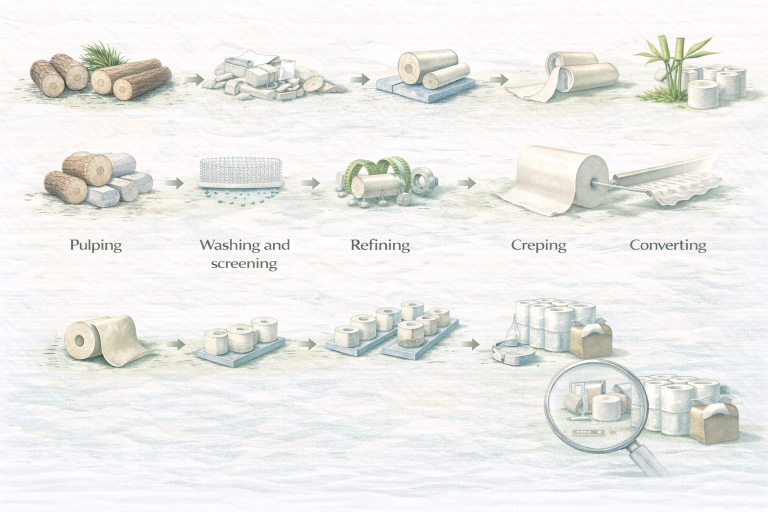
- 1、Step 1 Raw materials, the starting point for quality and positioning
- 2、Step 2 Pulping and refining, where strength begins
- 3、Step 3 Sheet forming and drying, where uniformity is created
- 4、Step 4 Creping, the step that builds softness
- 5、Step 5 Converting, how parent reels become retail rolls
- 6、Quality control checks that matter for buyers
- 7、How to choose a toilet paper manufacturer, a buyer oriented checklist
- 8、Key takeaway
Toilet paper looks simple, but it is a product of controlled engineering.
Fiber choice, drying, creping, embossing, and converting settings decide softness, strength, absorbency, and cost.
If you source for a brand or a distributor, understanding the process helps you spot risk early.
You can ask better questions, judge suppliers beyond price, and avoid a spec that fails in real use.
1、Step 1 Raw materials, the starting point for quality and positioning
Toilet paper starts with fiber.
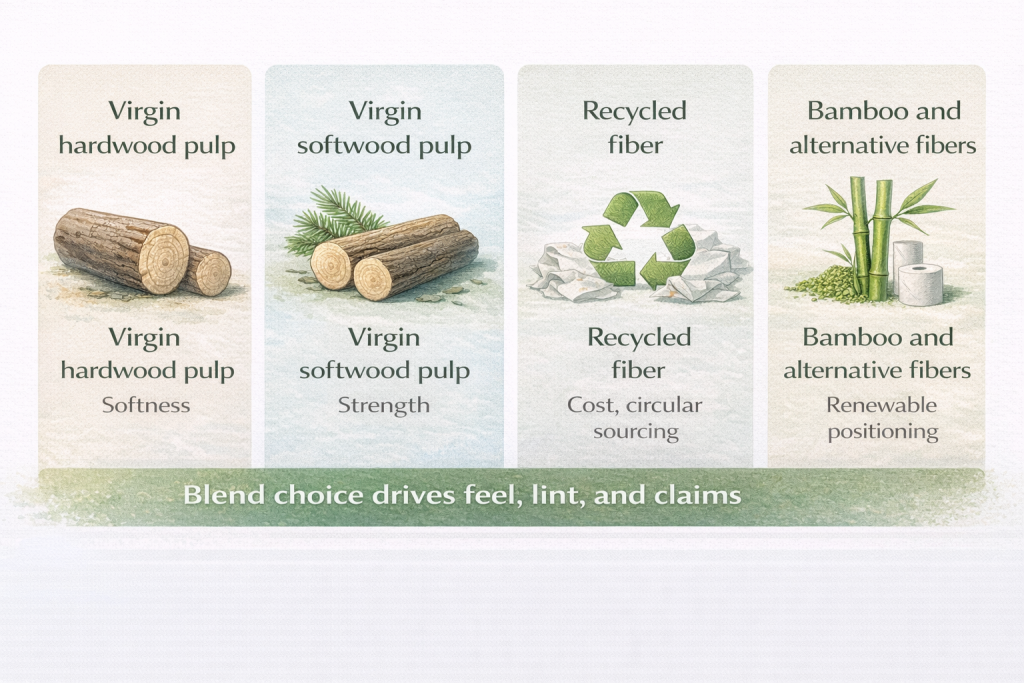
The fiber mix drives feel, strength, lint, and sustainability claims.
Common fiber options
- virgin wood pulp, hardwood for softness, softwood for strength
- recycled fiber, cost and circular sourcing, but more variability and potential lint
- bamboo and other alternative fibers, renewable positioning, performance depends on processing
What buyers should confirm early
- fiber blend targets, and allowed ranges
- recycled content percentage if claimed
- certifications when used in marketing, such as FSC or PEFC
- cleanliness and contaminant control, especially for recycled inputs
2、Step 2 Pulping and refining, where strength begins
Pulping separates usable fibers and removes unwanted material.
For virgin pulp, the goal is stable fiber quality.
For recycled pulp, cleaning and de-inking become critical.
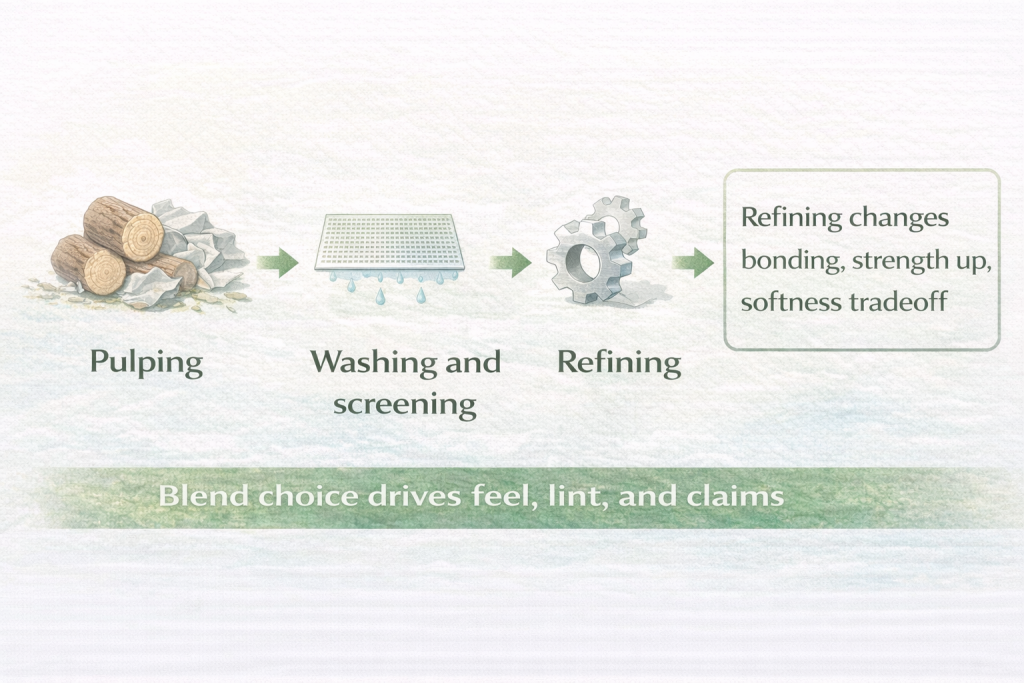
Refining then adjusts how fibers bond.
More refining can increase strength, but it can also reduce softness if pushed too far.
A practical buyer lens
- ask how the supplier balances softness and tensile strength
- ask what controls they use to keep pulp consistency stable
- request batch records when you run long term programs
3、Step 3 Sheet forming and drying, where uniformity is created
The fiber slurry is diluted and formed into a wet sheet on a moving wire.
Uniform formation matters, it affects weak spots, tearing, and uneven feel.
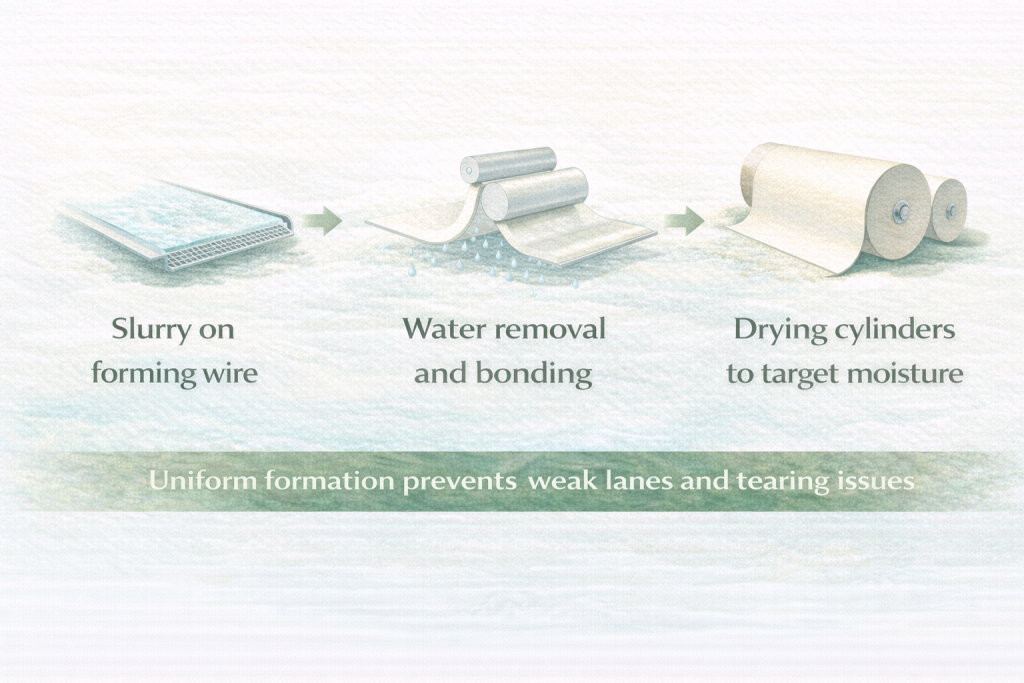
Drying removes moisture to the target range.
Overdrying can make tissue brittle.
Underdrying can weaken the sheet and create converting issues.
What to look for in samples
- consistent thickness across the sheet
- low dust and low lint
- no obvious weak lanes that tear too easily
4、Step 4 Creping, the step that builds softness
Creping is a key reason premium tissue feels soft and bulky.
A blade crepes the sheet off the dryer, creating micro wrinkles that add stretch and cushion.
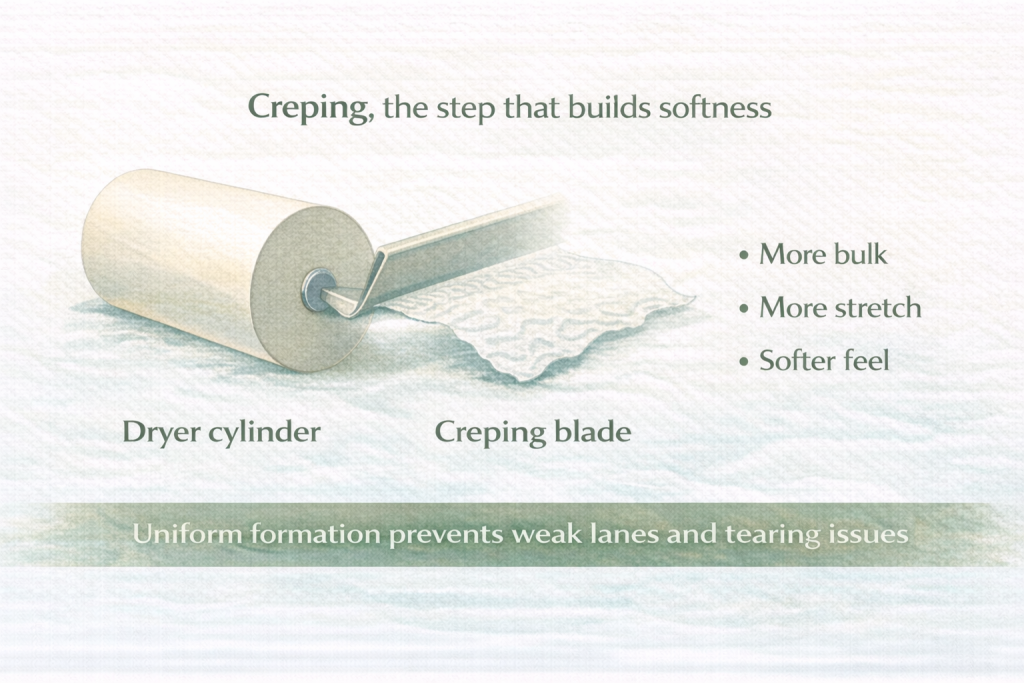
Creping also changes absorbency and hand feel.
It is not a cosmetic step, it is functional engineering.
Buyer takeaway
- softness can vary even with the same pulp
- creping settings and control discipline matter
- compare samples across batches, not only one shipment
5、Step 5 Converting, how parent reels become retail rolls
A large parent reel is converted into consumer rolls through controlled steps.
This is where many “looks fine on paper” problems appear.
Typical converting steps
- unwinding with tension control
- optional embossing to add bulk and improve pickup
- laminating layers for multi ply products
- perforation for clean tearing
- rewinding onto cores with stable hardness
- log sawing into roll width
- packaging for hygiene and transport protection
Common failure points buyers can catch early
- poor perforation that tears unevenly
- rolls that feel too soft, too loose, or too hard
- embossing that collapses or sheds lint
- inconsistent roll diameter and sheet count
6、Quality control checks that matter for buyers
A supplier can claim high quality, but QC shows the truth.
You do not need a long audit report, you need a few repeatable checks.
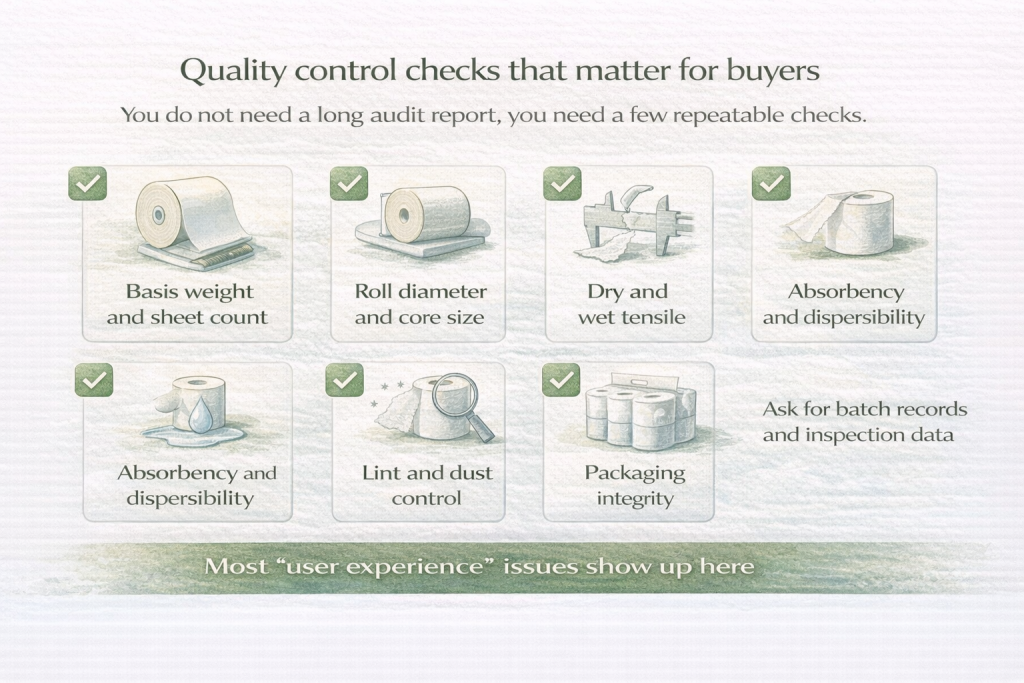
Key QC areas
- basis weight and sheet count consistency
- roll diameter and core size for dispenser fit
- dry and wet tensile strength
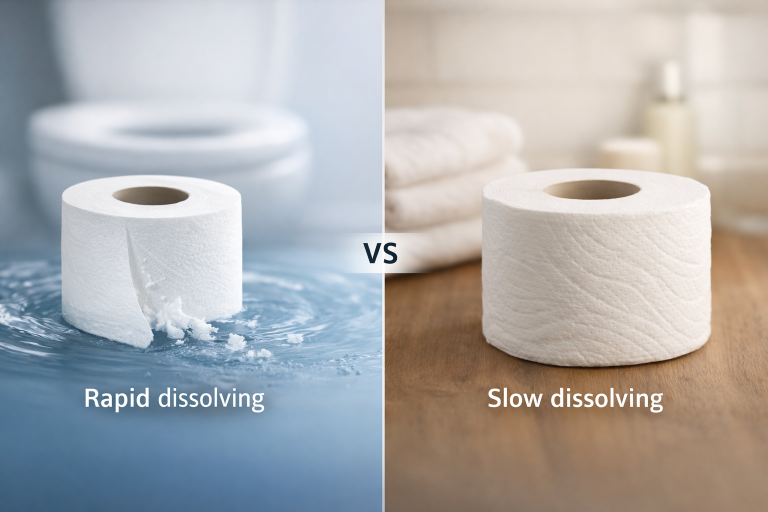
- absorbency and dispersion behavior
- lint and dust control
- hygiene controls, and chemical residue control when relevant
- packaging integrity for export cartons and pallet stability
7、How to choose a toilet paper manufacturer, a buyer oriented checklist
This is where process knowledge turns into safer sourcing.
Use the same checklist whether you buy virgin, recycled, or bamboo based tissue.
Ask the supplier to show
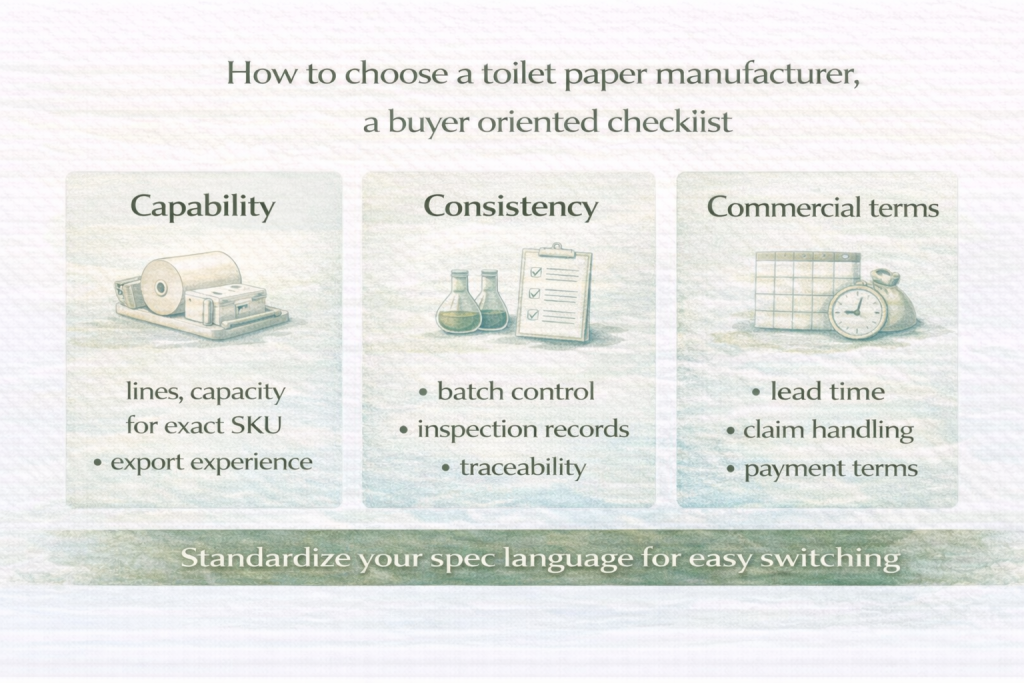
- clear spec sheet for ply, basis weight, sheet size, roll diameter, core size
- fiber sourcing story that matches your claims
- production capacity for your exact SKU, not a generic capacity number
- batch records and inspection records
- claims handling rules, replacement timelines, and traceability
- export experience, labeling accuracy, and packing plan
If you source private label, standardize your spec language.
That makes switching suppliers easier without resetting your program.
At HengChang Paper, we focus on stable converting, clear specs, and consistent batch control for long term supply.
We support private label programs and distributor sourcing with documentation that helps buyers manage risk.
8、Key takeaway
Toilet paper quality is designed step by step, it is not luck.
When you understand the production journey, you can verify supplier claims, prevent mismatches, and build a program that stays stable in cost, feel, and delivery.