contents
- 1、Pulp is the primary raw material, and it is never one simple category
- 2、Tissue jumbo rolls, the key semi raw material between mill and converter
- 3、Water and stock preparation, the hidden input that affects consistency
- 4、Additives and chemicals, what they do and how to evaluate them
- 5、Sustainability levers that matter in tissue inputs
- 6、A simple checklist for brands and buyers
- 7、Key takeaway
People often think tissue paper starts and ends with pulp.
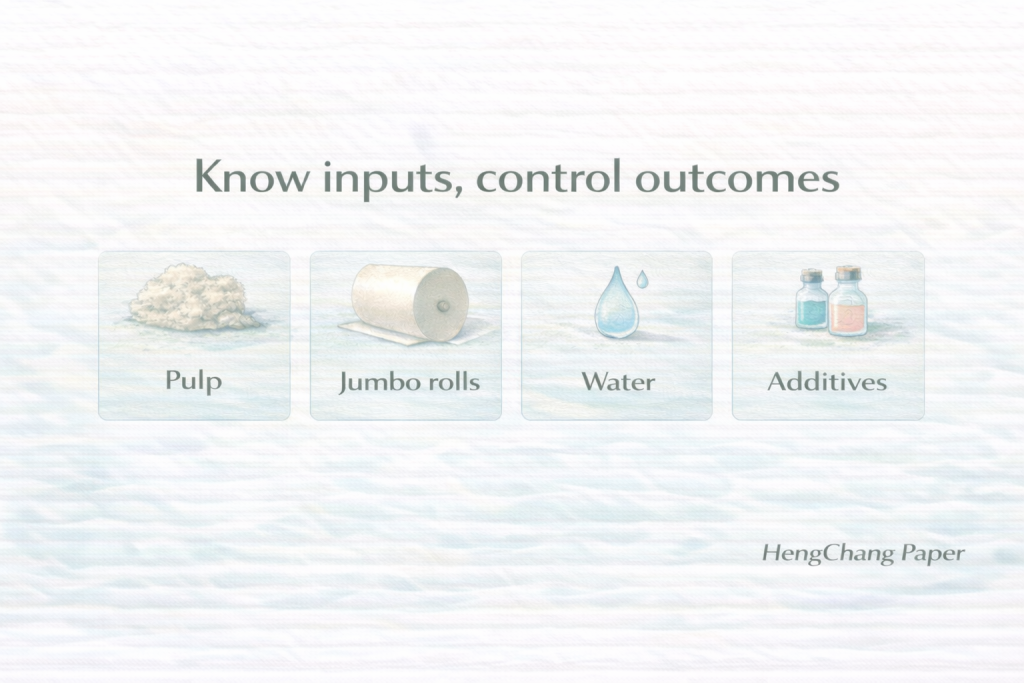
In real production, the “semi raw materials” also include parent rolls, water, and functional additives that shape how the sheet performs.
This guide explains the main inputs used in tissue manufacturing.
It also shows what each input changes in softness, strength, absorbency, and sustainability.
1、Pulp is the primary raw material, and it is never one simple category
Pulp is the foundation of toilet tissue, facial tissue, towels, and napkins.
But the source and processing method decide the final feel.
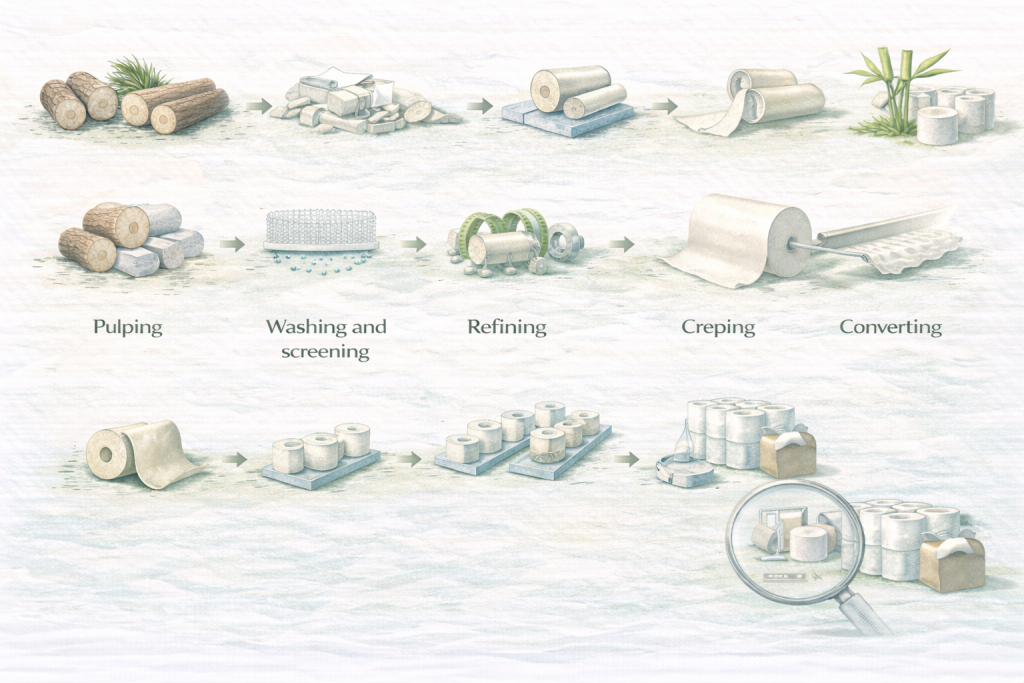
Virgin wood pulp
Virgin wood pulp is made from fresh wood fiber.
Suppliers often blend hardwood and softwood to balance comfort and strength.
Typical roles in a blend
- hardwood pulp, shorter fibers, smoother feel and softness
- softwood pulp, longer fibers, higher tensile strength and better integrity
Agricultural and alternative fibers
Bamboo, bagasse, and straw can be used as alternative pulp sources.
They support renewable positioning, but performance depends on processing and fiber preparation.
A practical buyer view
- do not assume all bamboo tissue feels the same
- ask for samples across batches, not just one shipment
Recycled paper pulp
Recycled pulp comes from post consumer and pre consumer waste streams.
It helps reduce virgin fiber demand, but quality depends on sorting, cleaning, and deinking.
Common recycled input types
- deinked pulp from printed papers
- mixed office waste streams
A practical buyer view
- recycled pulp can increase variability in lint, color, and strength
- strong contamination control matters more than a marketing label
2、Tissue jumbo rolls, the key semi raw material between mill and converter
A tissue jumbo roll is also called a parent roll, a big roll, or jumbo reel.
It is the semi finished material produced at the end of the tissue machine before converting.
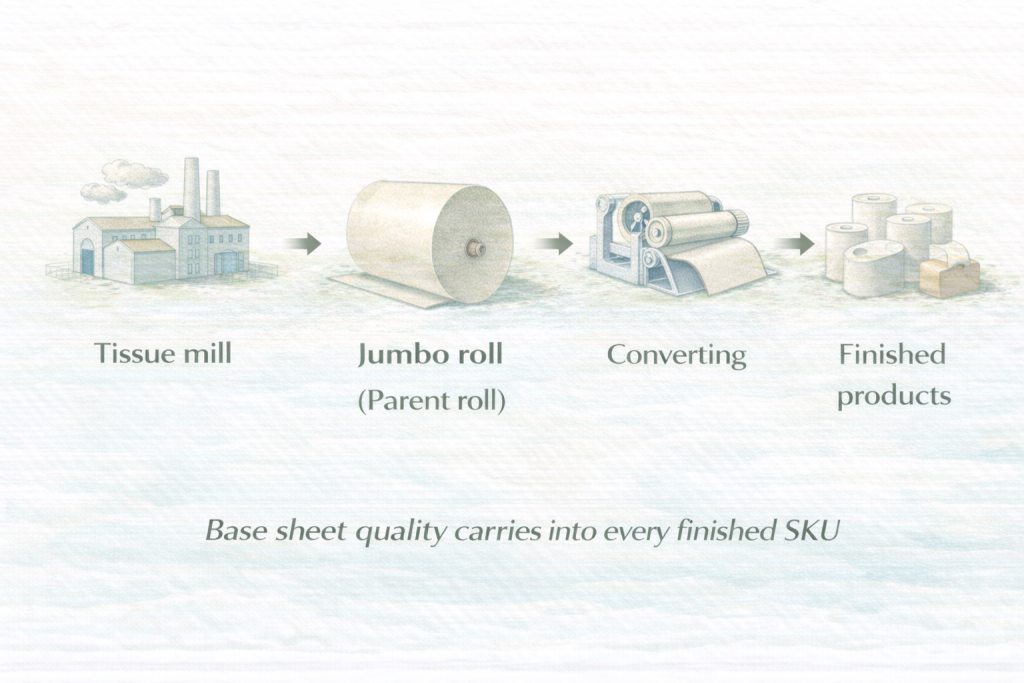
Why jumbo rolls matter
- they carry the base sheet properties into finished products
- converting lines cannot “fix” a weak base sheet
- roll width, hardness, and moisture stability affect runnability and waste
What buyers should confirm for jumbo rolls
- basis weight and moisture stability
- roll width, diameter, and core design for the converting line
- consistent hardness, to prevent telescoping and edge damage
3、Water and stock preparation, the hidden input that affects consistency
Water is not just a utility, it is part of the process.
It impacts fiber dispersion, cleanliness, and sheet formation uniformity.
In stock preparation, mills mix pulp with water, then add functional chemicals.
This stage decides whether the tissue becomes soft, strong, or highly absorbent.
A practical buyer view
- ask how the supplier controls pulp consistency and formation stability
- stable processing reduces batch variation and customer complaints
4、Additives and chemicals, what they do and how to evaluate them
Papermaking is a process industry.
Many tissue products use small amounts of additives to reach performance targets.
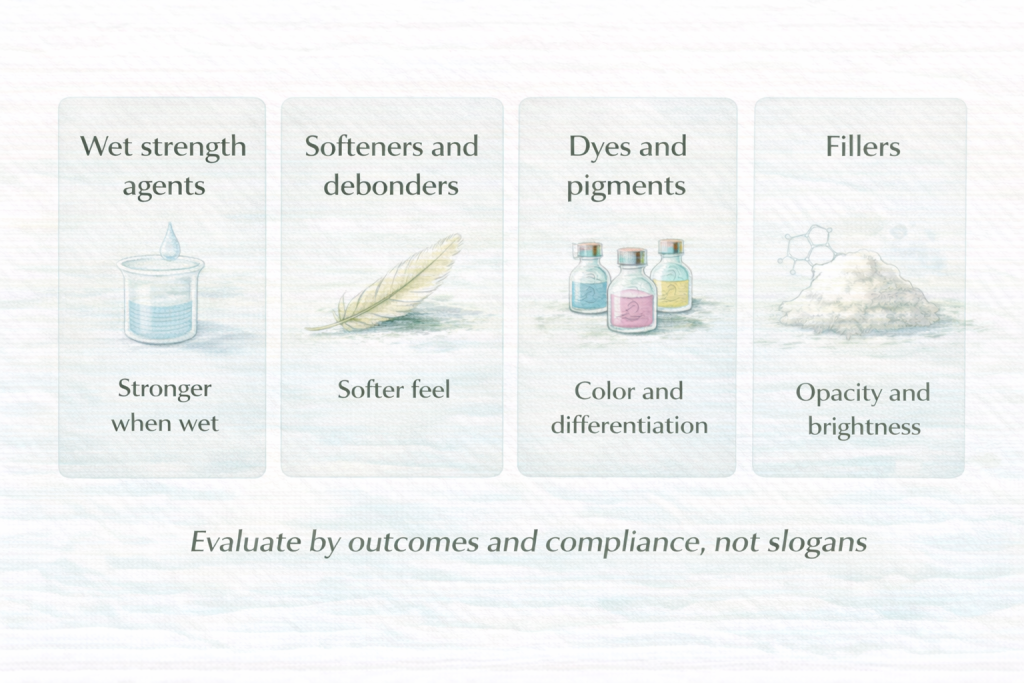
Common additive groups
- wet strength agents, improve strength when wet, important for towels and napkins
- softeners and debonders, reduce fiber bonding for a softer feel
- dyes and pigments, add color for decorative products
- fillers, support opacity and brightness, sometimes cost control
How to evaluate without getting lost
- focus on outcome targets, softness, wet strength, lint level
- ask for compliance documentation for your target market
- avoid relying on vague claims like chemical free
5、Sustainability levers that matter in tissue inputs
Sustainability is shaped by fiber choice and process discipline.
It is rarely one single decision.
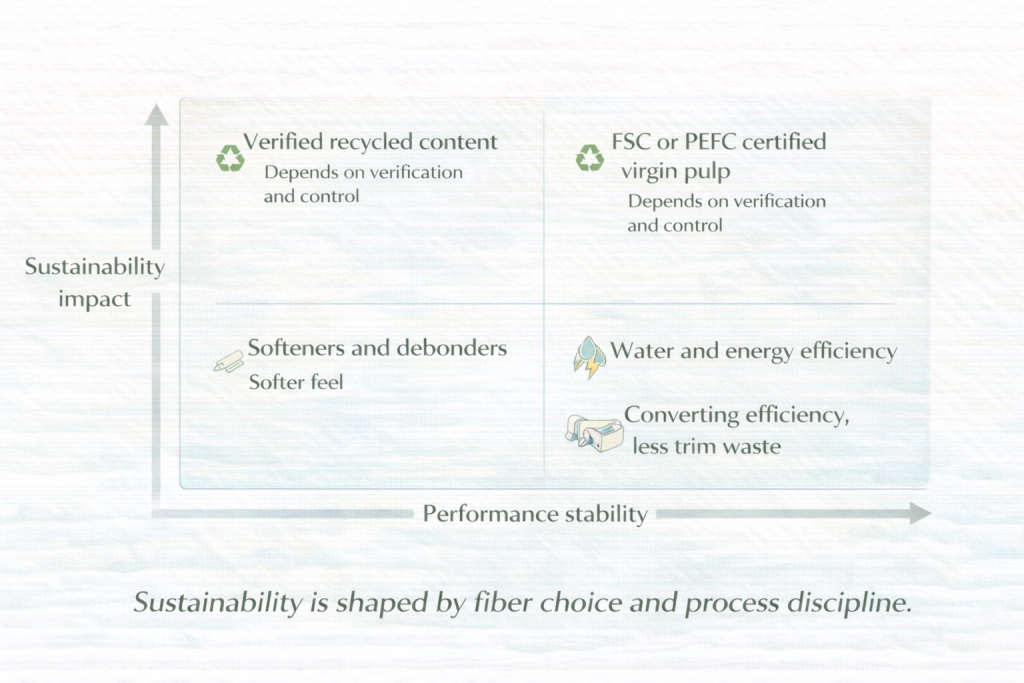
Practical levers suppliers can use
- higher recycled content with verified quality control
- certified wood pulp sourcing such as FSC or PEFC
- efficient water and energy management at the mill
- converting efficiency to reduce trim waste
A balanced view
- recycled inputs can reduce virgin fiber demand
- certified virgin fiber can also support responsible forestry when chain of custody is real
6、A simple checklist for brands and buyers
If you source tissue products, turn input talk into measurable items.
This prevents disputes and protects your brand.
Ask for
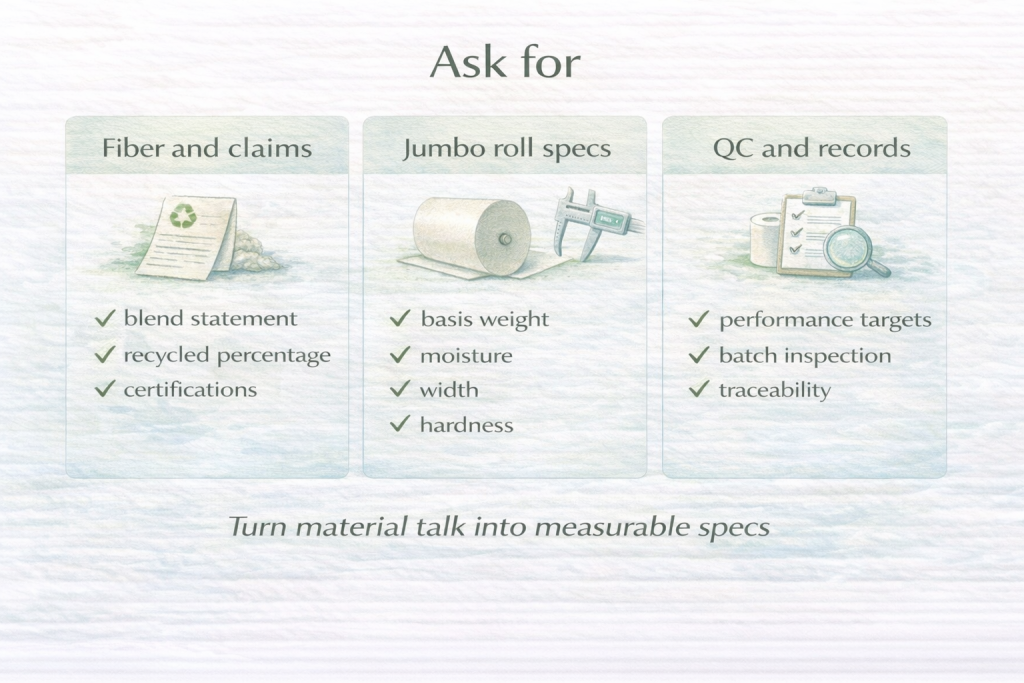
- fiber blend statement, and allowed range
- jumbo roll specs, basis weight, moisture, roll width, hardness
- key performance targets, softness, tensile, absorbency, lint
- batch inspection records and traceability
- sustainability proof when you make claims, recycled percentage, FSC or PEFC evidence
At HengChang Paper, we focus on clear specs and stable converting quality for long term supply.
That helps buyers reduce surprises and maintain steady consumer experience.
7、Key takeaway
The core semi raw materials in tissue production include pulp, jumbo rolls, water, and functional additives.
Each one affects the final product more than most buyers expect.
If you understand these inputs, you can select suppliers with stronger confidence and lower risk.