contents
- 1、The main product formats you will see
- 2、Roll vs folded — what really changes in use
- 3、Fold types explained in plain language
- 4、A practical way to choose the right towel format
- 5、Manufacturing and sourcing notes buyers often miss
- 6、Sustainability and waste control that actually shows up in cost
- 7、Frequently asked questions
Paper hand towels look simple, but the format you pick will change hygiene, usage control, restocking speed, and total cost.
This guide combines the best parts of common industry explanations — clear definitions, real-use behaviour, and practical sourcing notes — so you can choose quickly and buy with fewer mistakes.
1、The main product formats you will see
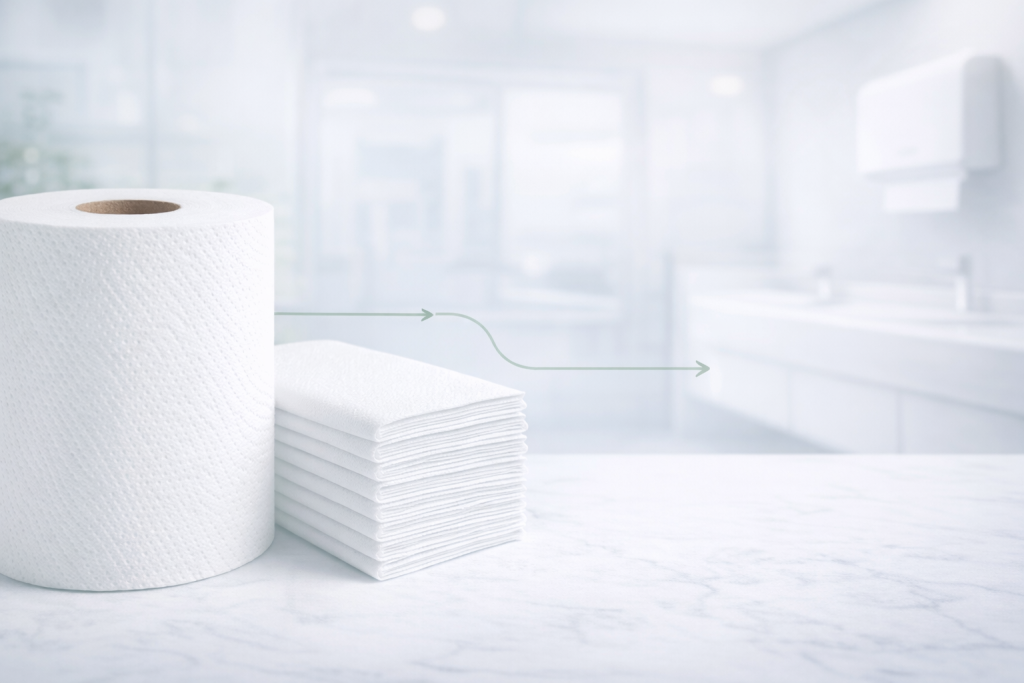
You can group most paper hand towels into three families — roll, folded, and tissue style products used for other jobs.
1) Rolled hand towels
A continuous sheet on a core, often perforated.
Common in washrooms, kitchens, workshops, and production areas.
You will see:
- Perforated roll towels
- Centrefeed rolls, sheets pull from the middle
2) Folded hand towels
Pre-cut sheets stacked in a dispenser.
You will see:
- Interfold styles — V-fold, Z-fold, M-fold, W-fold, narrow-fold
Sheets interlock and usually dispense one at a time - Stack styles — C-fold
Sheets are stacked but not interlocked
3) Related paper categories people confuse with hand towels
These are not hand towel formats, but buyers mix them up in sourcing:
- Tissue products for personal hygiene, such as toilet paper and facial tissue
- Napkins for dining and events
If you want a clean spec sheet, label the category first — it prevents wrong quotes and wrong dispenser fits.
2、Roll vs folded — what really changes in use
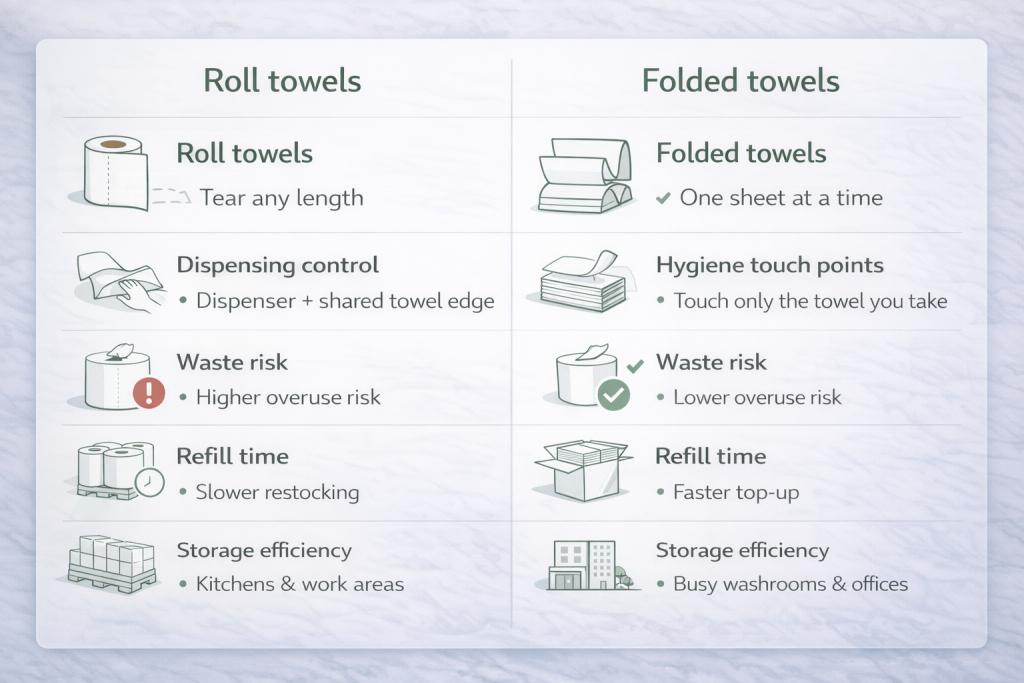
Dispensing control and waste
- Roll towels let users tear the length they want
This flexibility can increase overuse, especially in busy washrooms - Interfold towels push “one sheet at a time” behaviour
This usually improves consumption control - C-fold can pull out as a small handful
That often increases usage compared with interfold
Hygiene and cross-contact risk
- Interfold is often preferred when you want users to touch only the towel they take
- Roll can require touching the dispenser and the exposed sheet area
Design matters here — sensor dispensers help, but the towel edge is still a shared surface
Restocking and workflow
- Roll systems can reduce restock frequency in some settings
- Folded systems can speed up changeover if packs are easy to load and stacks stay neat
Interfold styles also keep the dispenser looking tidy
Storage and shipping
- Roll often uses less packaging and can ship efficiently
- Folded can pack tightly by shape, especially interfold stacks
Carton layout and pallet pattern matter more than people expect
3、Fold types explained in plain language
V-fold
Interfolded in a V shape.
One sheet presents the next.
Best when you want:
- Controlled use
- Good hygiene
- A familiar dispenser style
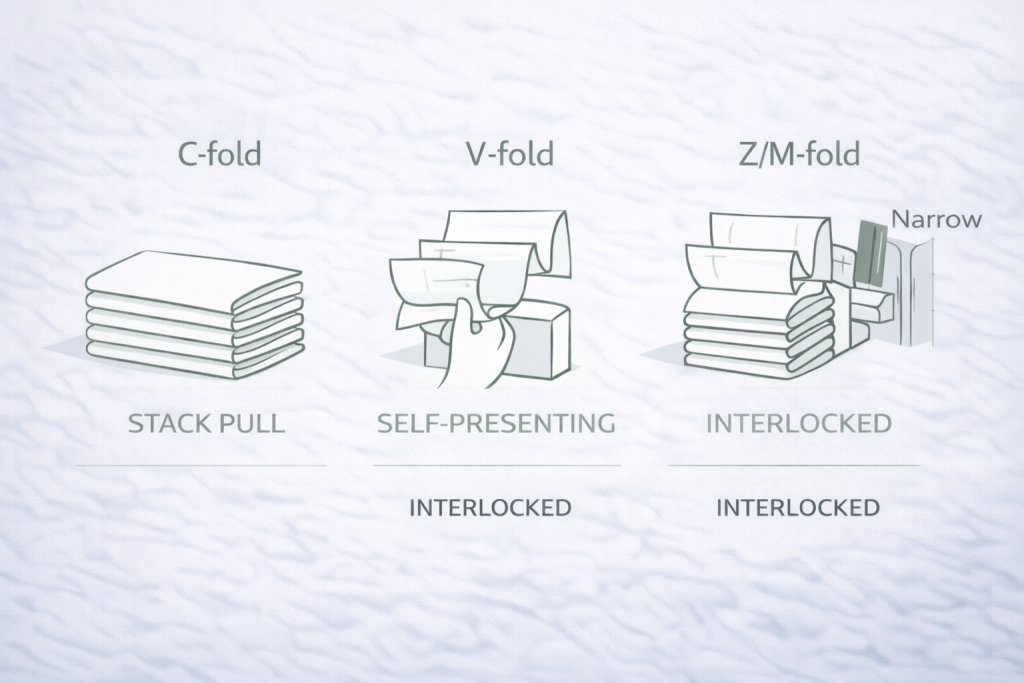
Z-fold and M-fold
Both are interfold “multifold” formats.
They dispense one by one and keep stacks neat.
Best when you want:
- High-traffic control
- Fast hand drying with fewer sheets
- Easy upgrades in many multifold dispenser types
W-fold and narrow-fold
Interleaved, self-presenting behaviour.
Narrow-fold fits tight dispensers or limited wall space.
Best when you want:
- Space-saving
- Strong control in shared washrooms
- A tidy presentation
C-fold
Stacked but not interlocked.
Simple, familiar, often chosen when a site already has C-fold dispensers.
Best when:
- Traffic is light to moderate
- You want a straightforward option without changing hardware
Roll and centrefeed
Continuous sheet, flexible length per use.
Best when:
- Towels are used for both hands and surface wiping
- Gloves, grease, or messy work makes quick grabbing important
- Shared work areas need access from multiple angles, especially centrefeed
Specialist finishes
Some sites care about finish more than fold.
- Straight-cut edge
- Low lint options for more sensitive environments
4、A practical way to choose the right towel format
Use this simple 4-step selection flow.
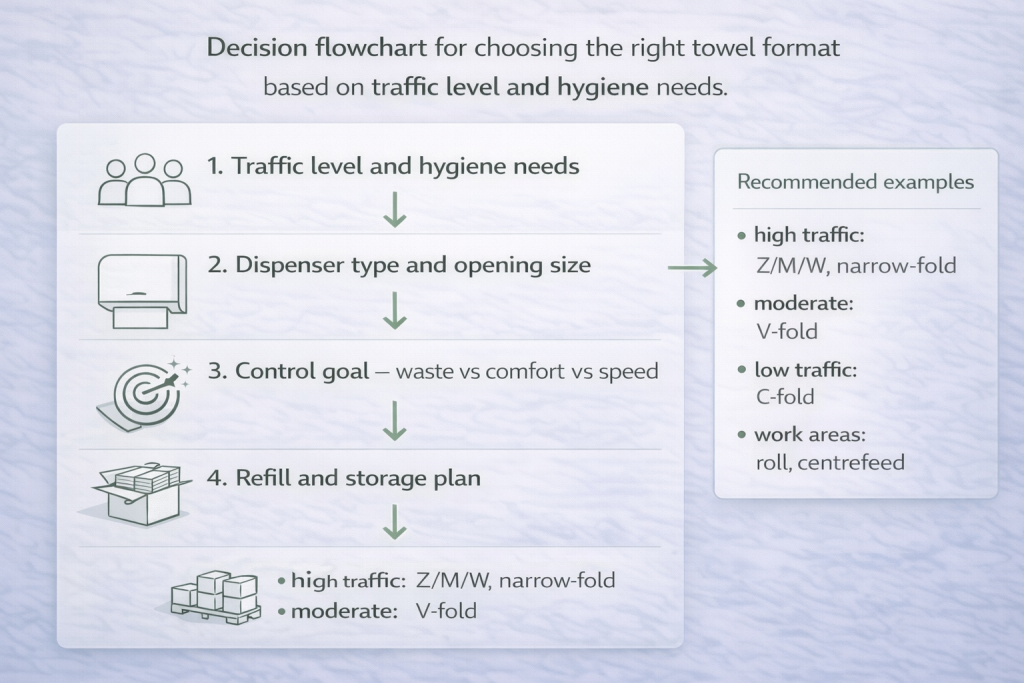
Step 1 — define the space and traffic
- High traffic washrooms
- Medium traffic washrooms
- Work areas and cleaning points
Step 2 — confirm dispenser compatibility
Before you pick a towel, check:
- Dispenser type, interfold or C-fold or roll
- Opening size and depth
- Whether it supports one-at-a-time dispensing
Step 3 — choose your main optimisation goal
Pick one main goal and let it drive the choice:
- Hygiene control
- Waste reduction
- Lowest total cost
- Fast restocking
- Small storage footprint
Step 4 — test with real users
Do not rely only on “fits on paper”.
- Load one pack or one roll into the real dispenser
- Run a short trial
- Track how many towels users actually take per dry
If you want quick starting points:
- High traffic, high control — Z-fold, M-fold, W-fold
- Medium traffic, balanced — V-fold
- Existing stack dispensers, light to moderate — C-fold
- Work areas and cleaning — roll, centrefeed
5、Manufacturing and sourcing notes buyers often miss
These are the details that cause most claims and reorder pain.
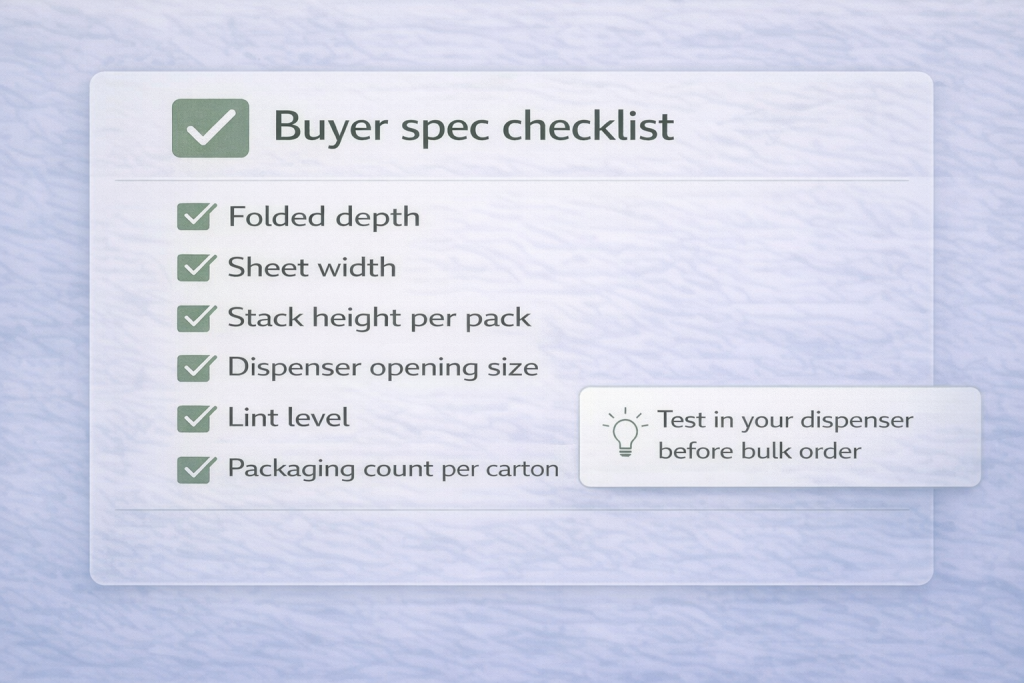
Buyer spec checklist
- Folded depth
- Sheet width
- Stack height per pack
- Dispenser opening size
- Lint level requirement
- Packaging count per carton
Also confirm:
- Ply and basis weight
- Embossing or pattern
- Perforation quality for rolls
- Core size for rolls and centrefeed
A practical rule:
- Test in your dispenser before a bulk order
A small fit issue becomes a large complaint at scale
6、Sustainability and waste control that actually shows up in cost
Sustainability is not only about materials.
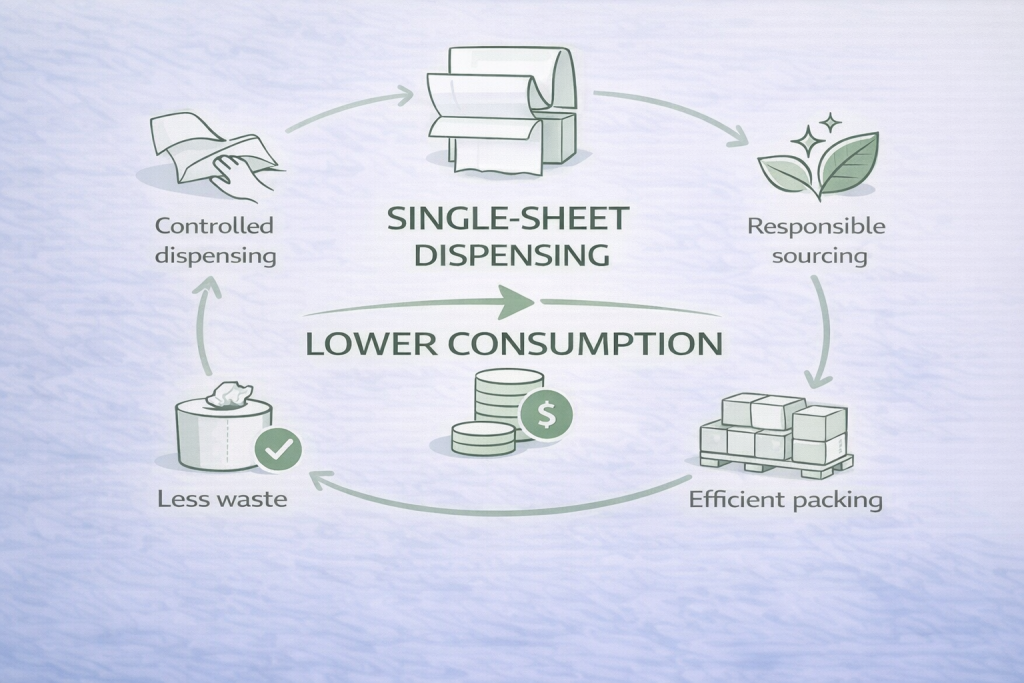
In washrooms, the biggest lever is often usage per hand dry.
What tends to help:
- One-at-a-time dispensing
- Packs and cartons that optimise space and reduce damage
- Responsible fibre sourcing, including recycled options where appropriate
- Choosing the right product for the task, not using premium hand towels as general wipe rags
At HengChang Paper, we treat usage control and sourcing as one topic — it helps buyers hit both hygiene and waste targets without turning the decision into a marketing exercise.
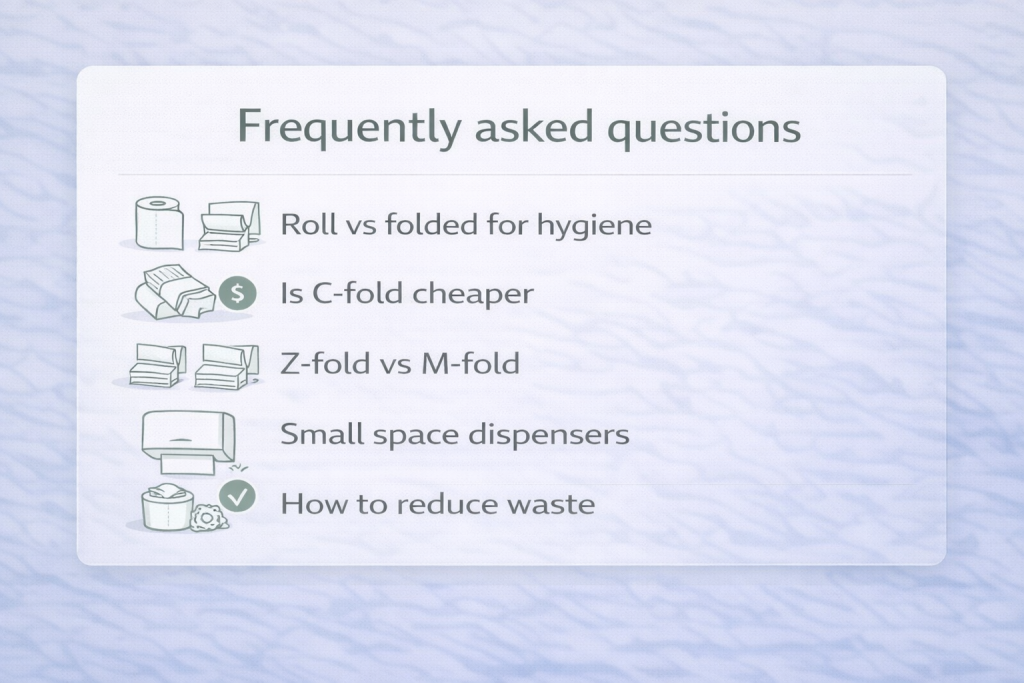
7、Frequently asked questions
Is roll or folded cheaper
Unit price can favour roll, but total cost depends on consumption.
If roll drives overuse, the “cheaper” option can cost more in practice.
Is C-fold always the budget choice
Not always.
C-fold can look cheaper, but higher usage rates can offset that.
Z-fold vs M-fold, what is the difference
Both are interfold multifold formats.
The practical difference is often dispenser fit and how the stack presents, not the hygiene concept.
Are roll towels more efficient than folded towels
They can be in work areas because sheet length is flexible.
In washrooms, interfold often wins on waste control.
How do I reduce waste fast without changing the whole washroom
Start with:
- A dispenser that supports one-at-a-time dispensing
- An interfold format that fits it reliably
- A short trial and simple usage tracking before you scale