contents
- 1、What ply means in toilet paper
- 2、1 ply vs 2 ply—what changes in real use
- 3、Cost and value—compare cost per use, not cost per roll
- 4、Beyond ply—specs that decide performance
- 5、Choosing the right toilet paper by scenario
- 6、Premium choices, 3 ply and 4 ply
- 7、Environmental impact—how to think about it without vague claims
- 8、A buyer checklist that prevents dispenser complaints
- 9、A short note from Hengchang Paper
- 10、FAQ
Toilet paper looks simple, but the wrong choice can cause everyday friction.
At home it shows up as rough feel, lint, and running out too fast.
In commercial restrooms it becomes dispenser jams, clog complaints, and higher refill labor.
This guide combines the most useful ideas from common industry articles, then adds the missing part—how to evaluate ply together with GSM, roll specs, and real usage.

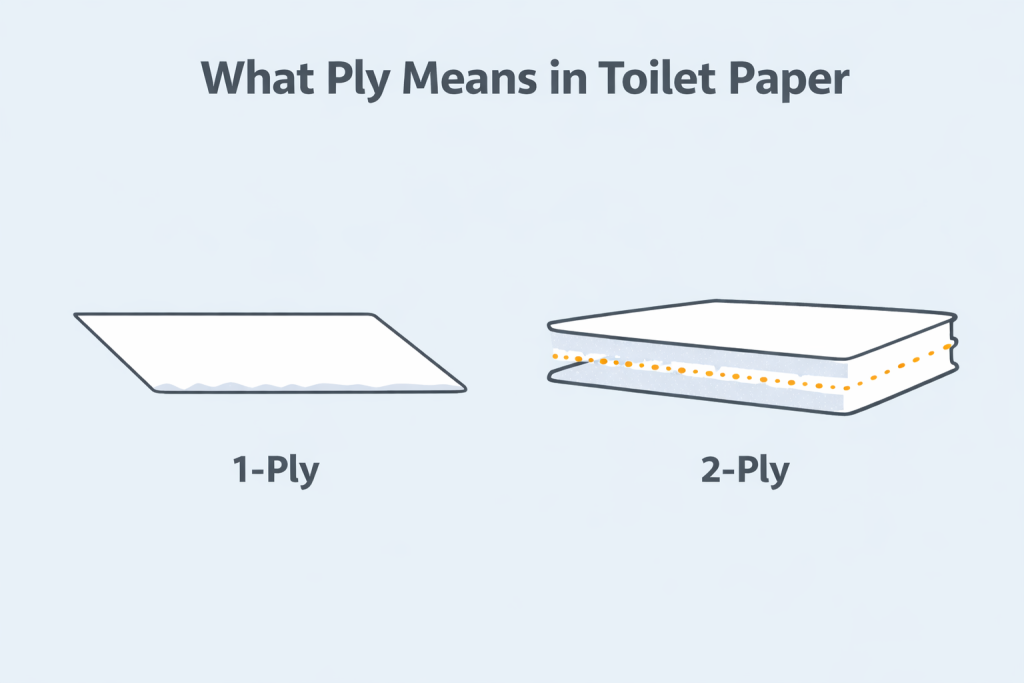
What ply means in toilet paper
Ply is the number of layers in one sheet.
1 ply uses a single layer.
2 ply bonds two layers together.
Ply count affects thickness and strength, but it does not guarantee softness, absorbency, or value.
Two products can both be 2 ply and still feel completely different.
1 ply vs 2 ply—what changes in real use
Strength and tear resistance
1 ply tends to tear more easily, especially when wet.
It works best when the sheet weight and bonding are designed for durability.
2 ply is typically stronger per sheet.
It is less likely to tear during folding and wiping, which improves user confidence.
What to watch for
- a very light 2 ply can still feel weak
- a well made 1 ply can be surprisingly reliable when sheet weight is adequate

Comfort and softness
2 ply often feels softer because two layers create more cushion.
That is why many homes and guest focused properties default to 2 ply.
1 ply can feel rougher, especially for sensitive skin.
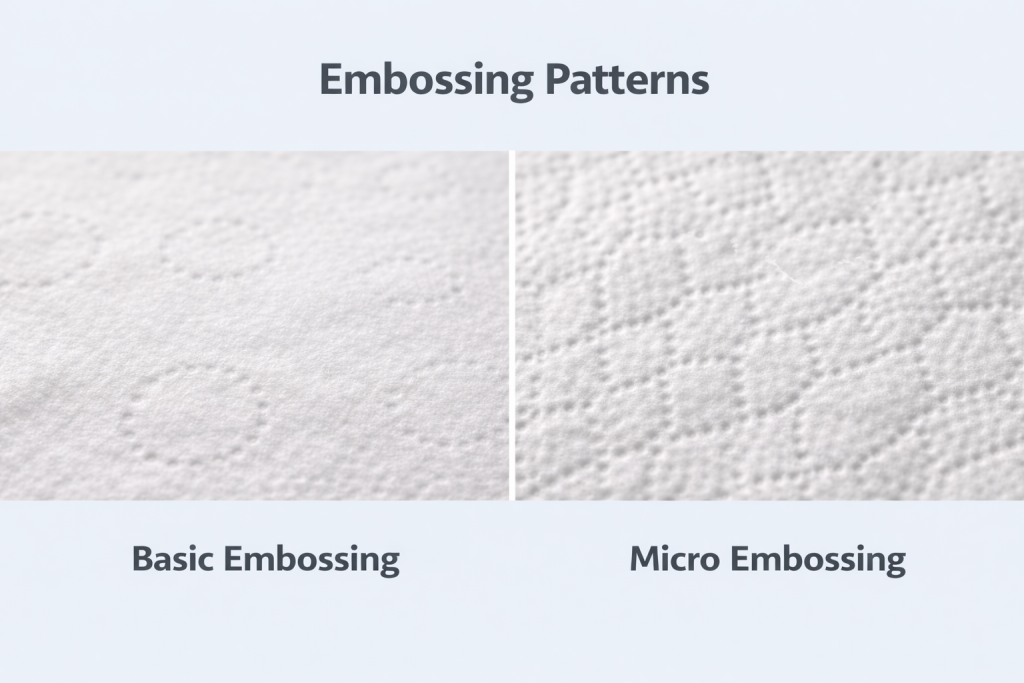
If comfort matters, you should also check paper dusting and embossing style, not just ply.
Simple check during sampling
- rub a sheet lightly between fingers, if it leaves lint, dusting may be high
- fold a sheet and wipe a wet surface, if it pills, bonding may be weak
Absorbency and cleaning efficiency
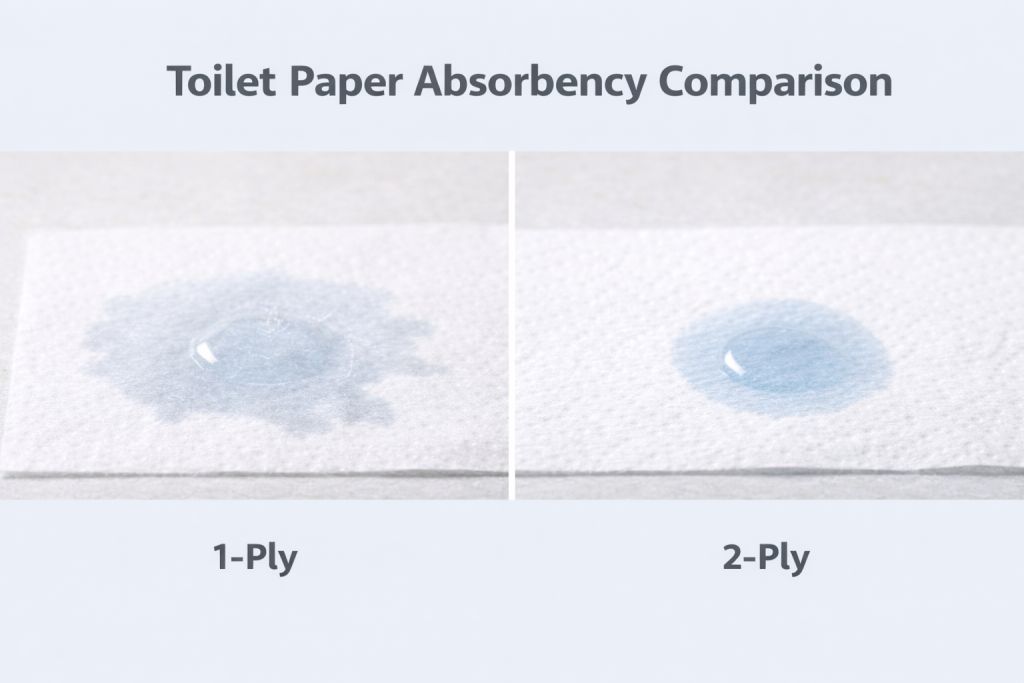
2 ply generally absorbs more per sheet, so users may need fewer sheets.
That can improve the experience and reduce total consumption in some households.
1 ply often requires more sheets per use.
In high traffic restrooms, the lower cost and longer roll length can still make 1 ply the practical option.
Plumbing, septic systems, and dispersion
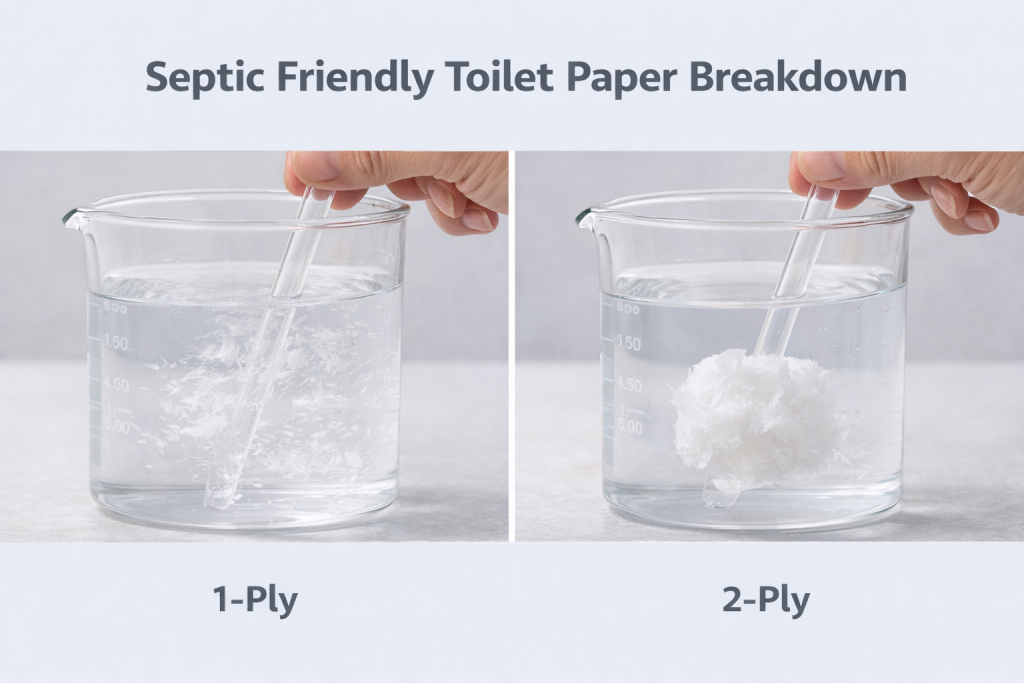
1 ply usually breaks down faster in water.
That can lower clog risk in older plumbing and septic systems.
2 ply can be fine, but thicker papers can disperse slower, especially when users pull a lot at once.
If clog complaints are common, you should prioritize faster breakdown and controlled dispensing.
Practical guidance
- for septic systems, many buyers prefer 1 ply or a standard thickness 2 ply
- avoid extra thick luxury styles in high risk plumbing environments
Cost and value—compare cost per use, not cost per roll
Roll price is the easiest number to see, but it is not the most useful one.
A simple way to compare value
- how many sheets people use per visit
- how often rolls need refilling
- how many clog related incidents happen per month
Typical pattern
- 1 ply costs less per roll, but can drive higher sheet usage
- 2 ply costs more per roll, but can reduce sheet usage and improve satisfaction
For homes, comfort often justifies 2 ply.
For schools, factories, malls, and transit hubs, 1 ply often wins on predictable spend and fewer plumbing issues.
Beyond ply—specs that decide performance
If you want consistent quality, these specs matter as much as ply.
- GSM or basis weight per ply
Higher GSM usually means a thicker, more absorbent sheet - sheet size
Larger sheets can reduce the number of pulls - roll length and sheet count
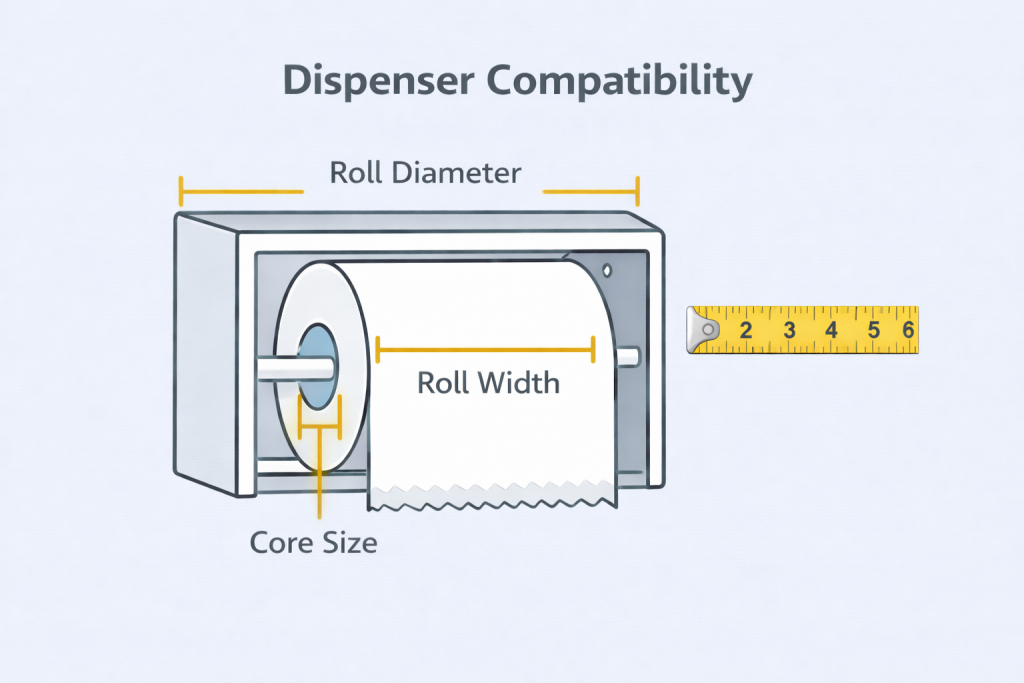
These control refill frequency and labor cost - core size, roll diameter, roll width
These determine dispenser compatibility - wet strength target
Especially important for commercial use - embossing and bonding method
These influence softness, strength, and absorbency - fiber source
Virgin pulp, recycled fiber, bamboo blends—each changes feel and sustainability profile
A useful reminder
2 ply is not automatically softer, and 1 ply is not automatically cheap in the long run.
The combination of ply and GSM is what usually predicts real performance.

Choosing the right toilet paper by scenario
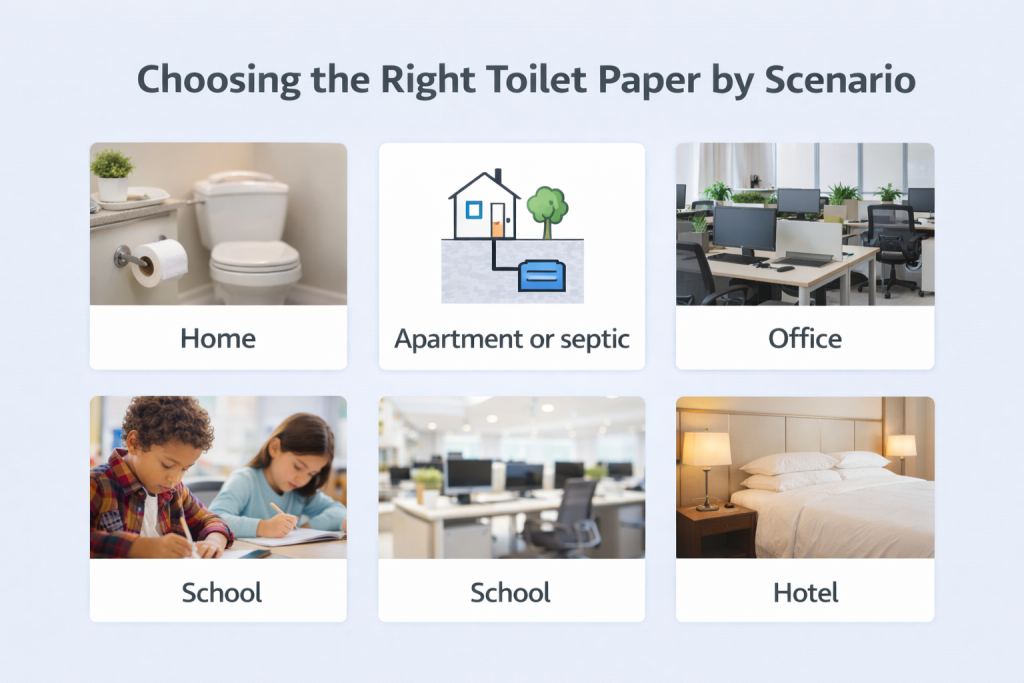
Home bathrooms
2 ply is the most common choice for comfort and strength.
If you care about a cleaner feel, look for lower lint and stable bonding.
Apartments, older plumbing, septic systems
1 ply is often the lower risk option.
If you prefer 2 ply, choose a standard thickness product and test before buying in bulk.
Offices, schools, and high traffic restrooms
1 ply is widely used because it controls cost and reduces clog risk.
Pair it with a dispenser that limits over pulling to reduce waste.
Hotels, spas, and guest focused spaces
2 ply is the baseline for guest satisfaction.
If you want a premium feel, focus on fiber quality and embossing, not just higher ply.
Premium choices, 3 ply and 4 ply
3 ply can deliver a noticeably richer feel and better strength, but it is usually higher cost and bulkier.
4 ply can feel luxurious, but it may disperse slower and can be less practical for high traffic restrooms.
A practical approach
- use 3 ply in suites, VIP floors, and premium venues
- avoid 4 ply in older plumbing environments unless you have tested dispersion
Environmental impact—how to think about it without vague claims
Ply count alone does not define sustainability.
A 1 ply roll may use less material per sheet, but it can also drive higher sheet usage.
More reliable indicators
- recycled content when appropriate for your market
- responsibly sourced fiber and chain of custody documentation
- packaging efficiency, carton count, and shipping optimization
- stable quality that reduces waste from over use and rework
Many buyers aim for a balance—comfortable enough to reduce over pulling, but not so thick that it increases clog risk and material usage.
A buyer checklist that prevents dispenser complaints
Use this before placing a bulk order
- confirm dispenser type and exact roll limits
roll diameter, roll width, core size - define the target experience
cost control, comfort, septic safety, or premium feel - request samples that match your final specs
ply, GSM, sheet size, embossing - run a short field test
refill frequency, user feedback, clog incidents, sheet usage - compare total cost
cost per use and labor, not just cost per roll
A short note from Hengchang Paper
Hengchang Paper produces toilet tissue across different ply levels and materials, with options designed for stable supply and sustainability goals.
If you are sourcing for retail, hospitality, or facility use, aligning ply, GSM, and dispenser fit upfront is the fastest way to reduce complaints and avoid costly reorders.
FAQ
Is 2 ply always better than 1 ply
No. 2 ply often improves comfort and strength, but 1 ply can be better for septic safety, high traffic cost control, and fast dispersion.
Does 1 ply last longer
Often yes, because rolls may have more length or more sheets.
Actual longevity depends on roll length, sheet size, and how many sheets users pull each time.
Is 1 ply more cost effective
Sometimes. If users pull more sheets, the savings can shrink.
For commercial restrooms, 1 ply often stays cost effective because it reduces clog risk and fits controlled dispensing programs.
What should I ask a supplier before buying
Sheet size, GSM or basis weight, roll length, core size, embossing style, and samples for testing.