contents
- 1、From ancient China to modern bathrooms
- 2、The turning point, when machines started designing feel
- 3、Through air drying, the absorbency breakthrough with an energy price
- 4、Product innovation followed daily life, not the other way around
- 5、Machine innovations that raised speed and quality
- 6、Sustainability moved from talk to measurable levers
- 7、What this history means for today’s buyers
Tissue paper looks like a basic daily product.
Behind it sits a long story of changing hygiene habits, faster machines, and constant tradeoffs between softness, strength, cost, and energy.
This article walks through where tissue began, what pushed modern tissue forward, and which innovations still shape product performance today.
1、From ancient China to modern bathrooms
Paper use for hygiene goes back centuries.
Early records link the first toilet paper use to China around the 6th century, long before mass manufacturing.
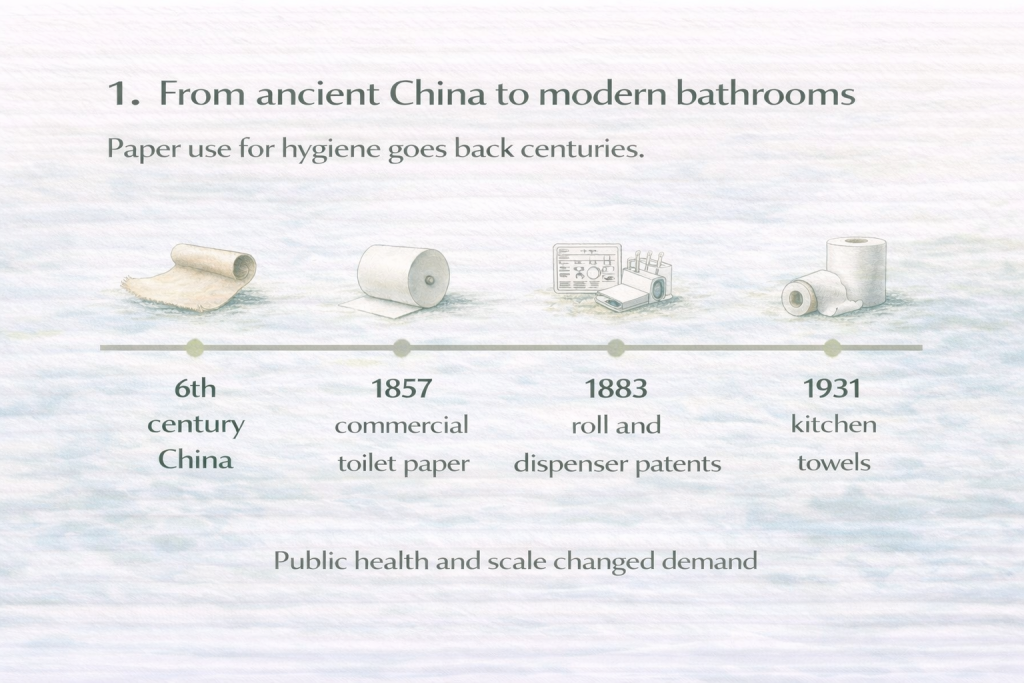
Over time, tissue shifted from occasional, local use to an everyday consumer staple.
That shift came from two forces — public health awareness and industrial scale production.
Key milestones people still reference
- 1857, one of the first commercial toilet paper products in the United States
- 1883, early patents for toilet paper rolls and dispensers
- early 1900s, the move toward disposable paper for shared public settings
- 1920s, facial tissues become a modern consumer category
- 1931, kitchen paper towels enter home kitchens and gradually replace cloth towels
2、The turning point, when machines started designing feel
Modern tissue is not only fiber.
It is machine design, drying method, and surface engineering.
The Yankee dryer and creping, the core of soft tissue
Many classic tissue machines rely on a large steam heated drying cylinder, often called a Yankee dryer.
After the sheet dries on the cylinder, a doctor blade crepes it off the surface.
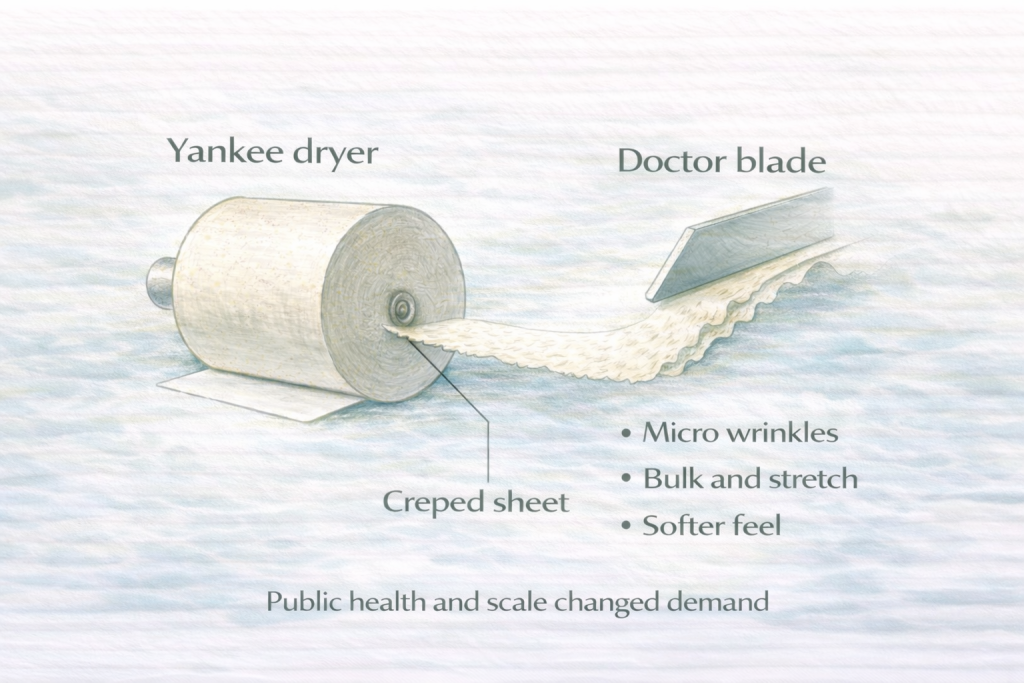
Creping creates micro wrinkles.
Those micro structures add bulk and stretch, which people read as softness.
What controls the result
- adhesive and release balance on the cylinder
- doctor blade geometry and stability
- speed differences across the machine
- pulp type and fiber preparation
3、Through air drying, the absorbency breakthrough with an energy price
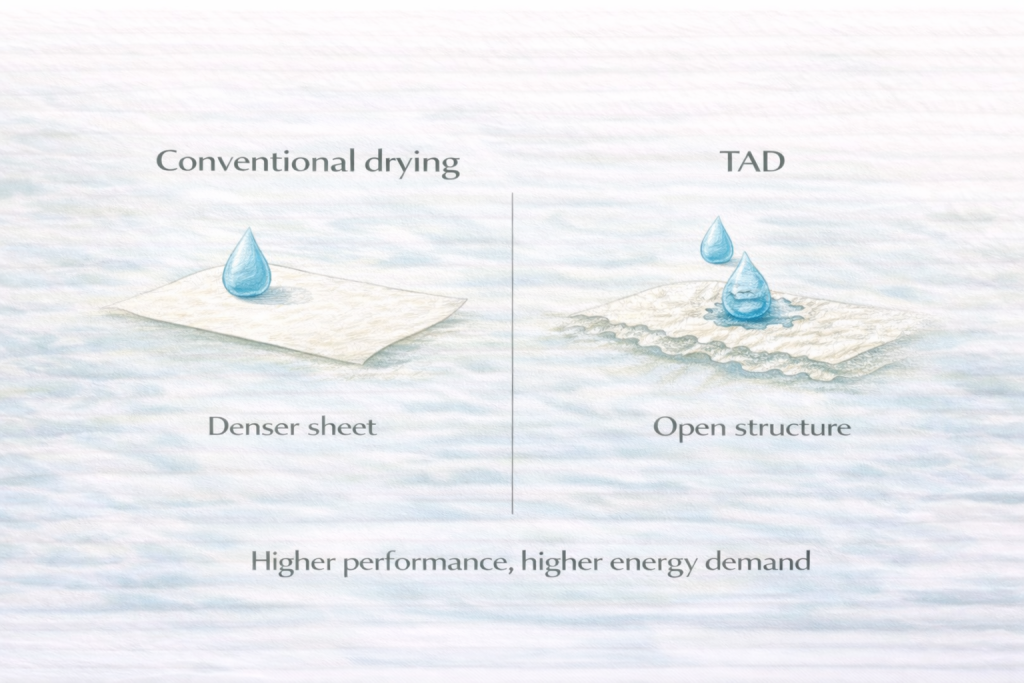
For products that need higher water absorption and stronger wet performance, many mills use through air drying.
Hot air passes through the web, keeping a more open structure and higher bulk.
Why users feel the difference
- faster pickup for spills
- higher water holding capacity
- better wet tensile strength, especially in towels
The reality check
- through air drying can consume roughly double the energy compared with conventional drying
- it often sits in premium positioning where performance justifies cost
4、Product innovation followed daily life, not the other way around
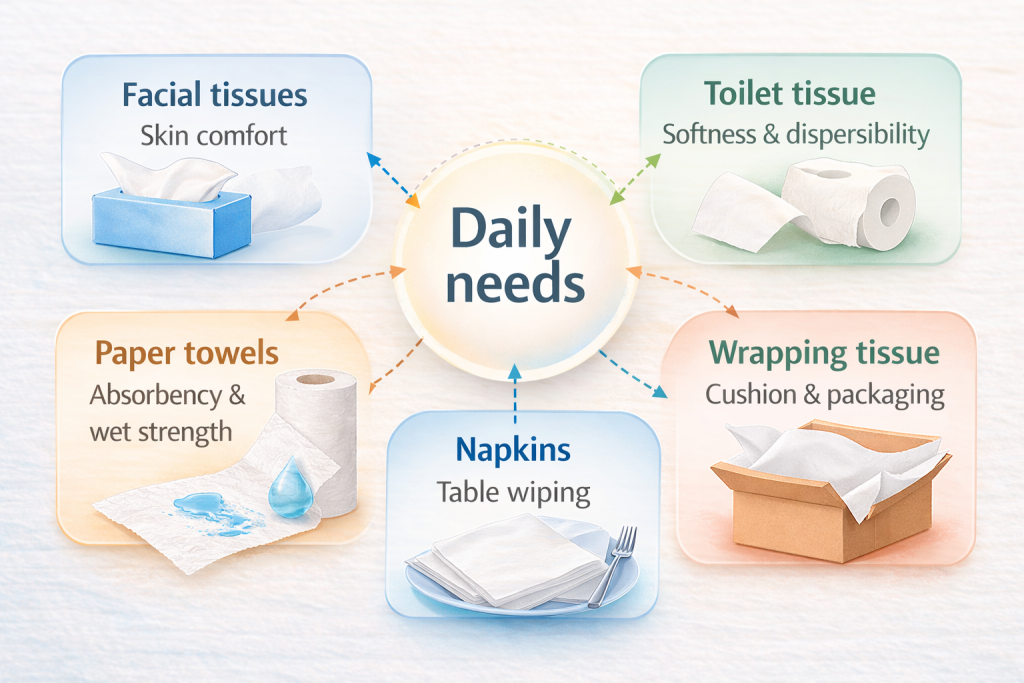
Tissue categories expanded because people wanted specific performance for specific tasks.
One sheet could not do everything well.
How product lines separated
- facial tissues, softer surface and comfort focus
- toilet tissue, softness plus dispersibility expectations
- paper towels, wet strength and absorption focus
- napkins, balanced softness and strength for dining
- wrapping tissue, thin cushioning and presentation
That product separation also shaped fibers and structures.
Long fiber content matters more in towels, while surface softness matters more in facial and bath tissue.
5、Machine innovations that raised speed and quality
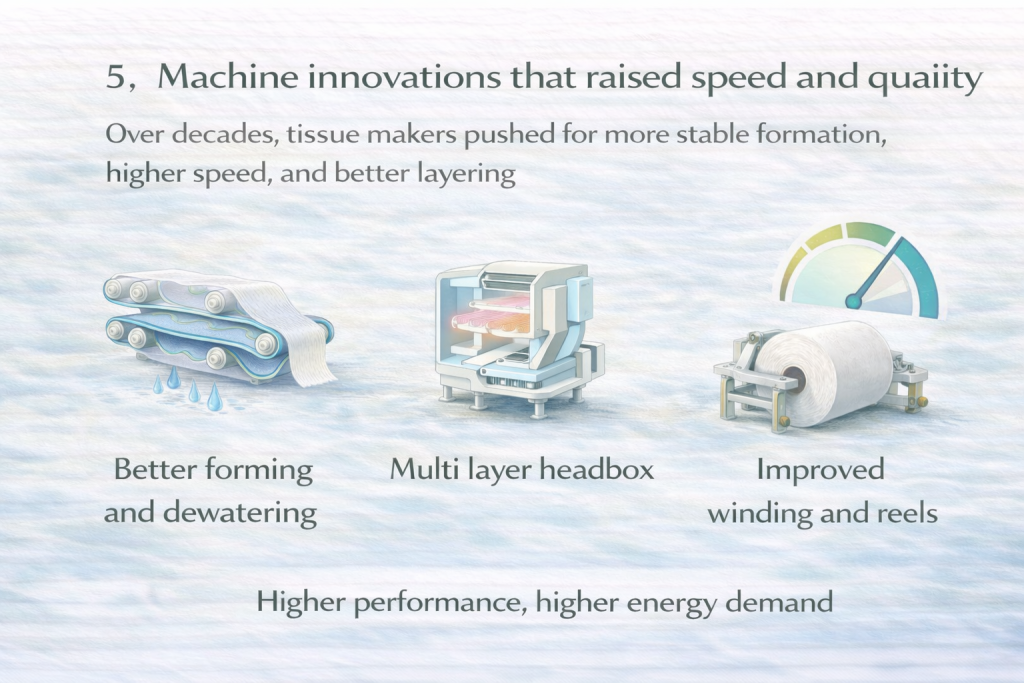
Over decades, tissue makers pushed for more stable formation, higher speed, and better layering.
That led to major changes in forming, headbox design, and winding.
Common innovation themes
- better dewatering and formation for uniform sheets
- multi layer headbox concepts, stronger fibers inside and softer fibers outside
- improved reels and winding stability for cleaner converting
- hybrid concepts that aim for higher bulk at lower energy than full through air drying
For buyers, this matters because “technology level” shows up as consistency.
Better formation and stable winding reduce weak lanes, dust, and converting losses.
Sustainability moved from talk to measurable levers
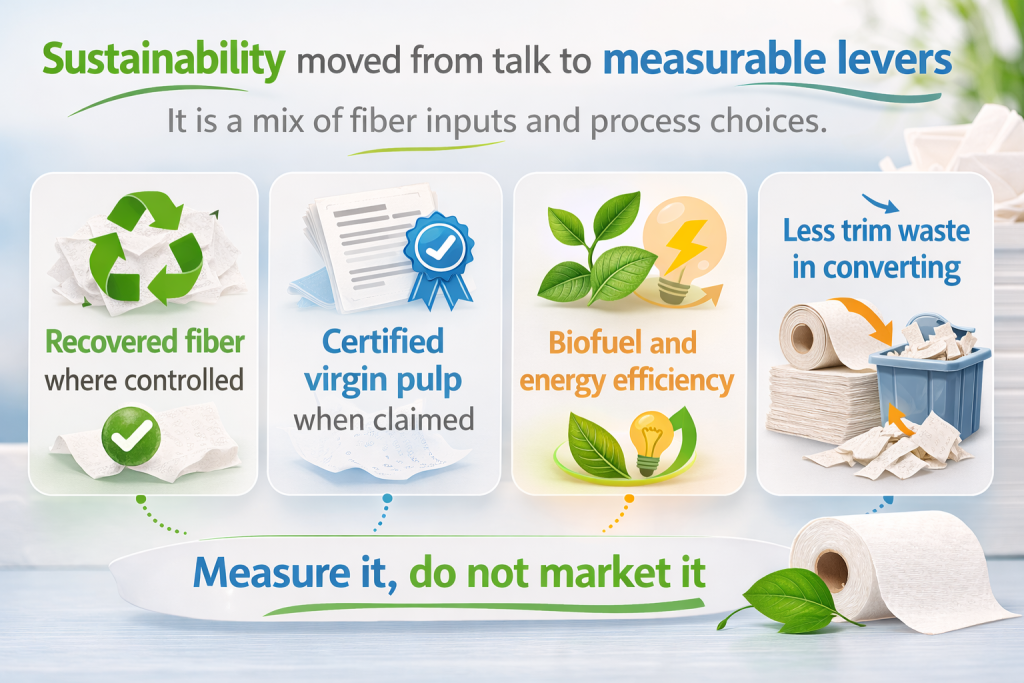
Tissue sustainability is rarely one single decision.
It is a mix of fiber inputs and process choices.
Common levers used by modern mills
- higher recovered fiber use where quality control is strong
- responsible virgin pulp sourcing with credible certification
- more biofuel and process efficiency in energy supply
- better runnability and converting efficiency to reduce trim waste
A balanced way to think about it
- recycled fiber can reduce virgin fiber demand
- certified virgin fiber can be responsible when forestry and chain of custody are real
- performance also affects footprint, if a better sheet reduces overuse
7、What this history means for today’s buyers
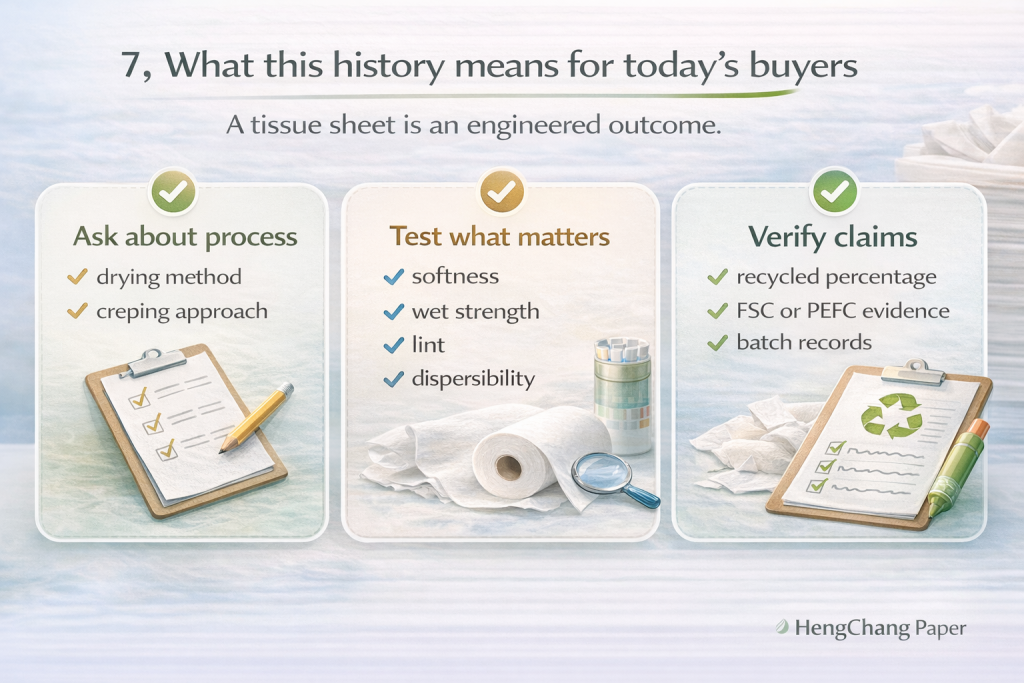
A tissue sheet is an engineered outcome.
If you know the history, you also understand the logic of modern specifications.
Practical takeaways for sourcing
- match the product category to the machine capability, not just the quote
- ask what drying and creping approach the mill uses, because it drives feel
- test wet strength and lint for towels, test softness and dispersibility for bath tissue
- treat energy and fiber claims as verifiable items, not slogans
At HengChang Paper, we approach this the same way.
We focus on stable specifications and consistent converting outcomes, so brands and distributors can scale with fewer surprises.